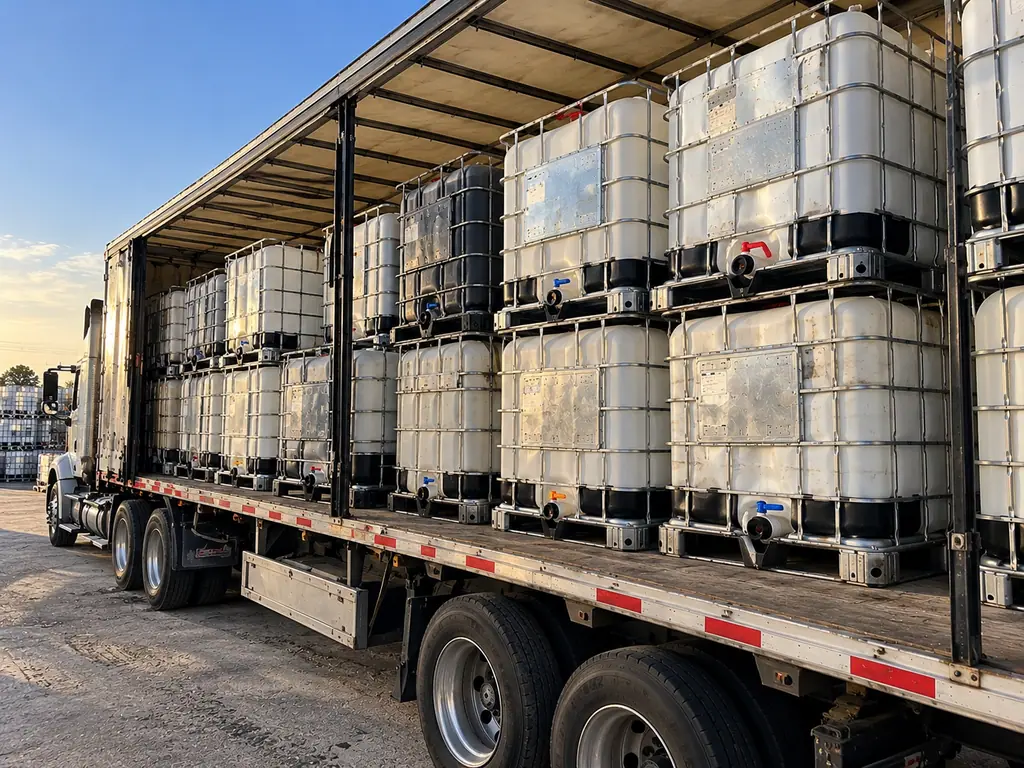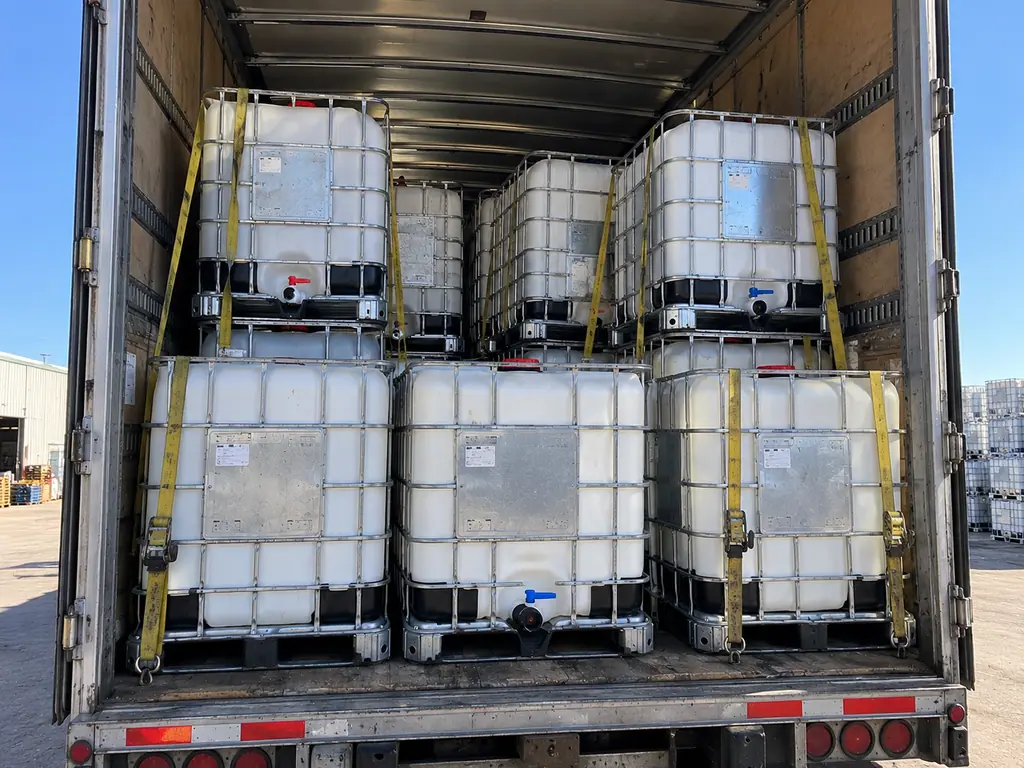
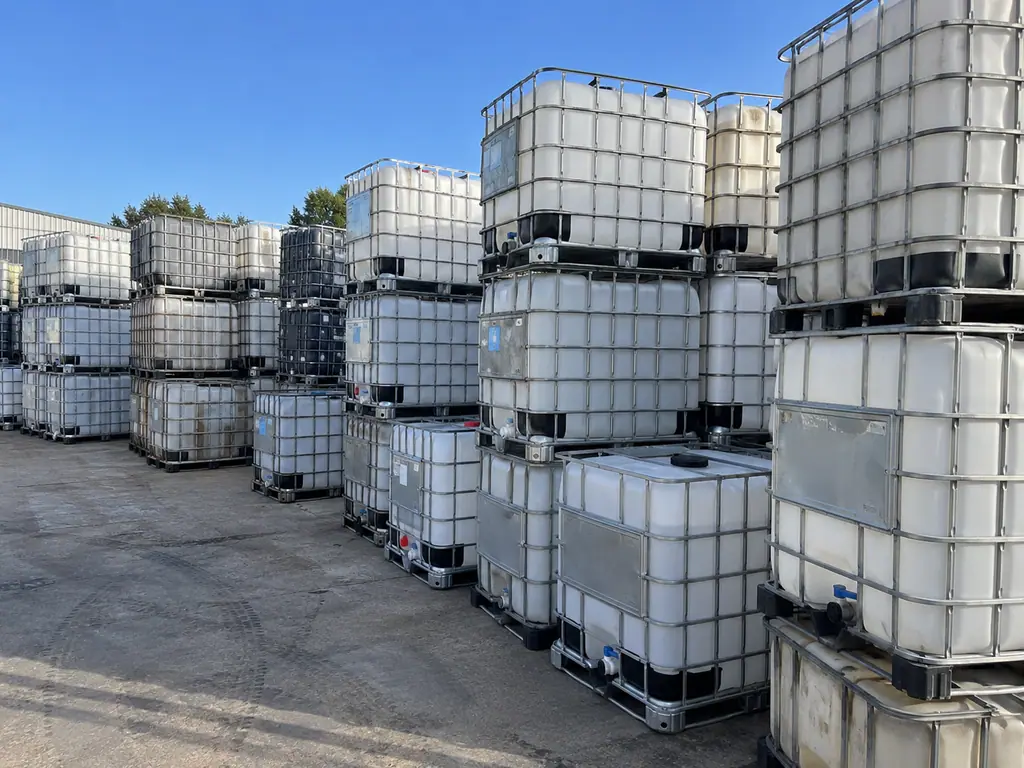
Ask our graders to rank what shortens bottle life and sunlight wins by a distance. Not chemistry, not stacking, not handling. Sunlight.
What is actually happening
Ultraviolet light has enough energy to break carbon-hydrogen bonds in the polymer chain. The resulting radicals react with oxygen, producing chain scission and cross-linking at the same time. The practical result is a material that is simultaneously weaker and more brittle.
It happens from the outside in, and it is cumulative and irreversible. A bottle does not recover over winter.
The visible stages
| Stage | Appearance | Rough exposure | Our grade response |
|---|---|---|---|
| New | Translucent, slightly blue-white, waxy to touch | — | Full grade |
| Early | Faint yellow cast, especially on the sun-facing wall | 1–2 summers | No change |
| Mid | Clear yellowing, slight cloudiness, surface less waxy | 3–4 summers | Grade down one |
| Late | Opaque, chalky bloom that marks your hand | 5–6 summers | Non-contact use only |
| Failed | Brittle; a thumbnail press leaves a white crease | 6+ summers | Regrind |
The thumbnail test
Press a thumbnail firmly into the bottle wall near a top corner, which is usually the most exposed area. Healthy HDPE deforms slightly and springs back with no mark. Degraded HDPE leaves a white crease, which is the material crazing at the surface. It takes two seconds and it is the most reliable field test we know.
The cheapest intervention there is
Shade. A tarp, a shade frame, a north wall, an opaque wrap, a carport roof. Any of them roughly doubles usable bottle life, and the most expensive option costs less than the difference in resale value between a clear bottle and a yellowed one.
A second benefit: blocking light also stops algae in anything water-filled, which is a separate problem with the same solution.
The cage does not care
Galvanised steel is indifferent to UV. This is why so many of the units we scrap have a perfectly sound cage and a finished bottle, and why rebottling exists as a service. Sunlight is a bottle problem, and the bottle is the consumable.
What this means when buying used
Clarity is the best single proxy for remaining life, and it is visible in a photograph. A clear bottle in a scruffy cage is a better purchase than a pristine cage with a yellowed bottle, every single time, because cage repair is a forty-minute job and bottle repair does not exist.