Transport & logistics
An empty truck
is the most wasteful
object in this trade.
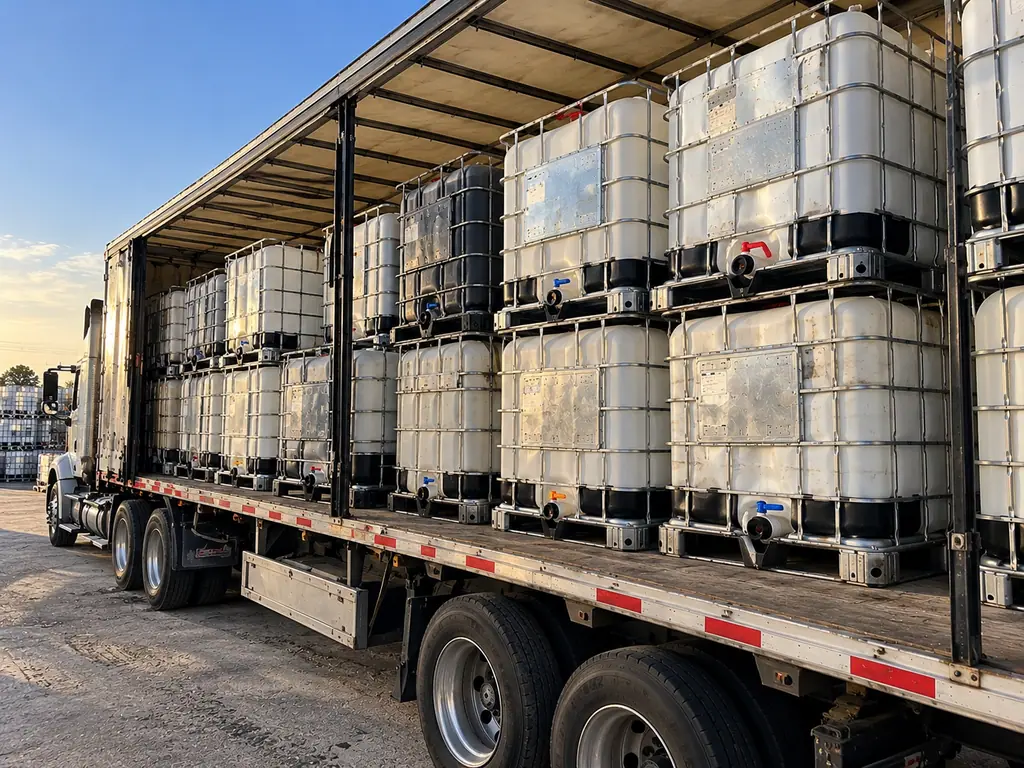
We plan routes so that empties ride home on lanes that were already running. Sixty-eight percent of our pickups are backhauls — which is better for your freight bill and for the only atmosphere we have.
Quote a pickup or a deliveryOrigin ZIP, destination ZIP, count
Load planning
How many fit, and what breaks first
Load counts are governed by trailer length and tote height, not by weight — totes are bulky long before they are heavy.
| Equipment | 275 gal | 330 gal | Stacked? | Notes |
|---|---|---|---|---|
| 48' flatbed | 44 | 40 | No — single stack | Our standard outbound. Strapped and corner-boarded. |
| 53' dry van | 48 | 44 | No | Needs a dock or a ramp at both ends. |
| 26' box truck | 16 | 14 | No | Metro Detroit workhorse. |
| 26' box with lift gate | 14 | 12 | No | For sites with no forklift. |
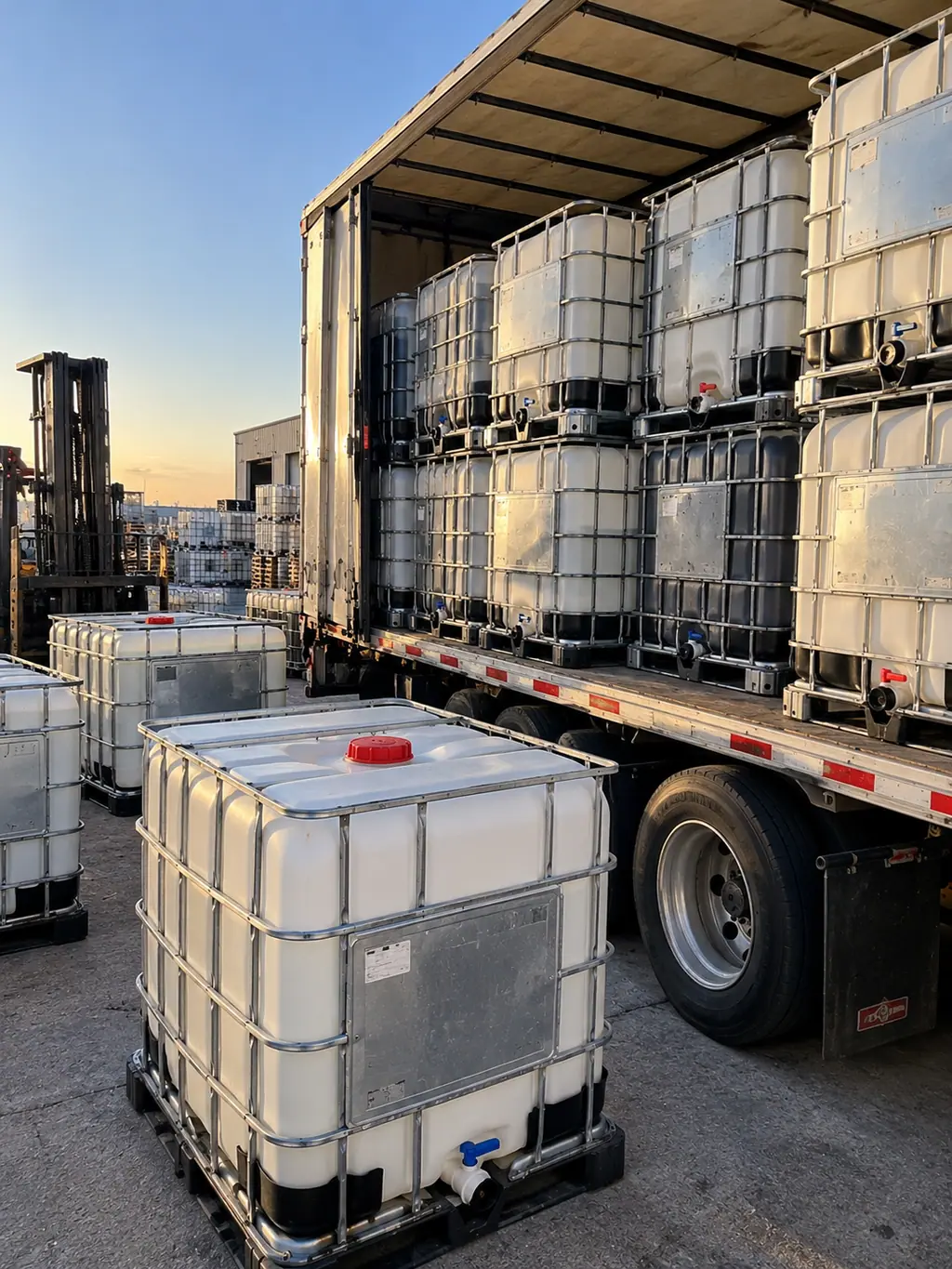
| 48' flatbed, double stacked | 88 | — | Tested units only | Only on cages we have pressure-tested and signed off. |
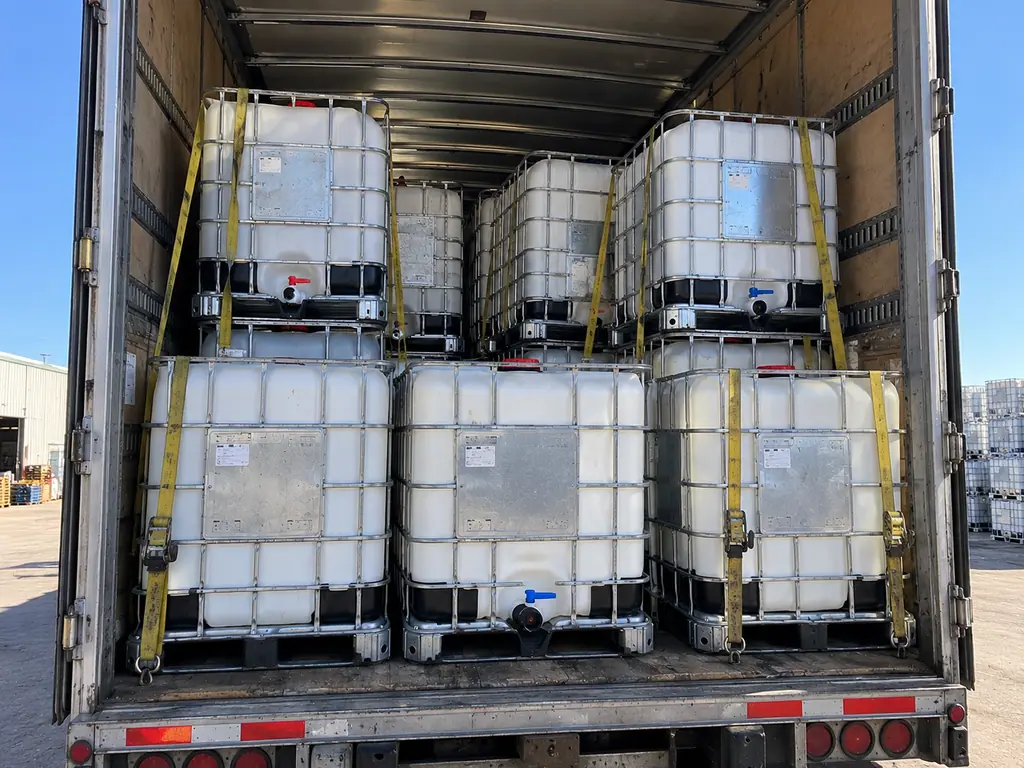
Loaded the same way, every time
Strapped in pairs across the cage frame with corner board under every strap — never over the bottle, where road vibration cuts into the plastic.
Coverage
Where our own wheels go
Inside the core radius we control the schedule and the handling. Outside it we broker honestly and tell you who is carrying your load.
- Core radius
- 300 miles of Livonia — all of Michigan, northern Ohio and Indiana, southern Ontario. Two to four business days to pickup.
- Extended
- Illinois, Wisconsin, Kentucky, western Pennsylvania, New York. Five to eight business days, often on a partner carrier.
- Lower 48
- Loads of twenty or more units. Quoted per lane, with the transit we actually expect rather than the one that wins the order.
- Cross-border
- Southern Ontario regularly. Customs paperwork for used containers handled, and we will tell you when it is not worth it.
Before the truck comes
- Drain and cap every valve — a weeping tote on a flatbed is everyone’s problem
- Stage units together on level ground with forklift access
- Tell us your dock height, or tell us you have no dock
- Measure your door height if a 330 is involved
- Have the last-contents paperwork ready for the driver
What we bring
- Straps, corner board and edge protection as standard
- Pallet jack on box trucks; forklift at the yard
- Spill kit on every unit, every trip
- A driver who will count the load with you
Freight questions
The practical ones
Is delivery free?
Inside our core radius, orders of twenty or more units usually ship free, and we say so on the quote rather than burying it. Smaller orders carry a flat local rate. Outside the radius it is priced per lane — and we would rather lose an order than quote a transit we cannot hit.
Can you deliver without a forklift on site?
Yes, on a lift-gate box truck. Capacity drops to about fourteen units, and the driver will need a flat, firm surface to set them down on. Tell us before we schedule, not when the truck arrives.
What about a residential address?
Routinely — farms, homesteads, rainwater projects. A 48-foot flatbed cannot get down every driveway, so we will usually send the box truck and we will ask about turning space.
Will a 330 fit through my door?
That depends on a measurement only you can take. A 330 runs 53 to 59 inches tall before the pallet. We have cancelled loads over this exact issue, so please measure.
Do you ship single totes?
Locally, yes. Long-distance single-tote freight costs more than most single totes are worth, and we will tell you that instead of taking the order.
Need something moved?
Origin ZIP, destination ZIP, count and format. That is enough for a firm freight number.