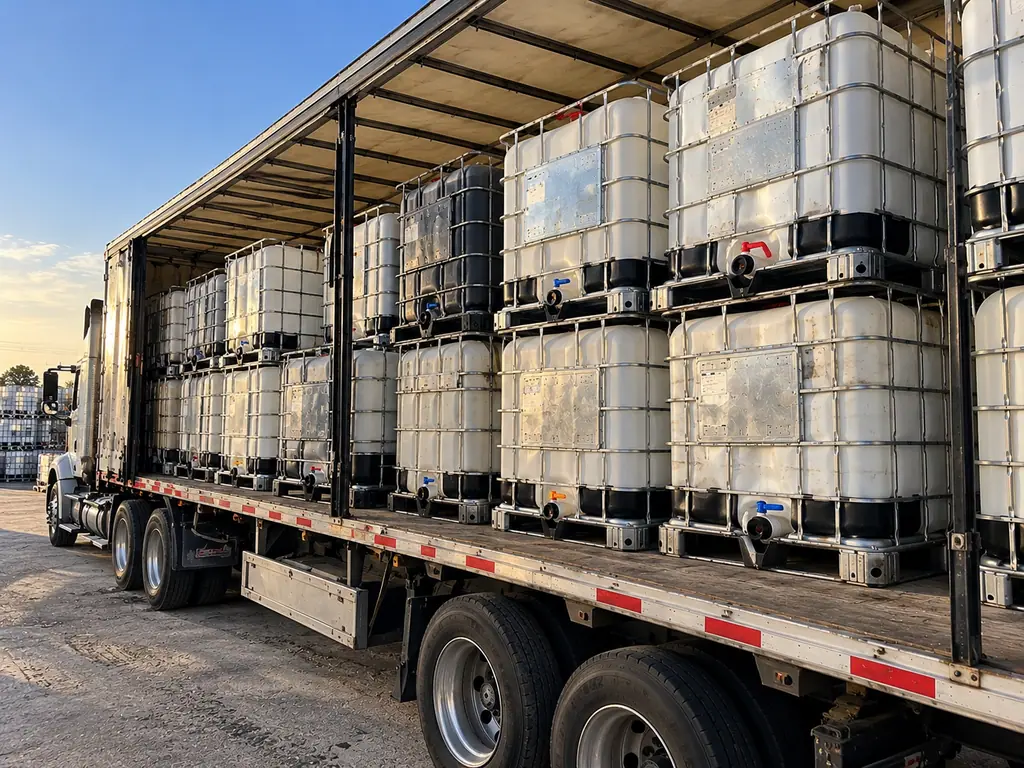
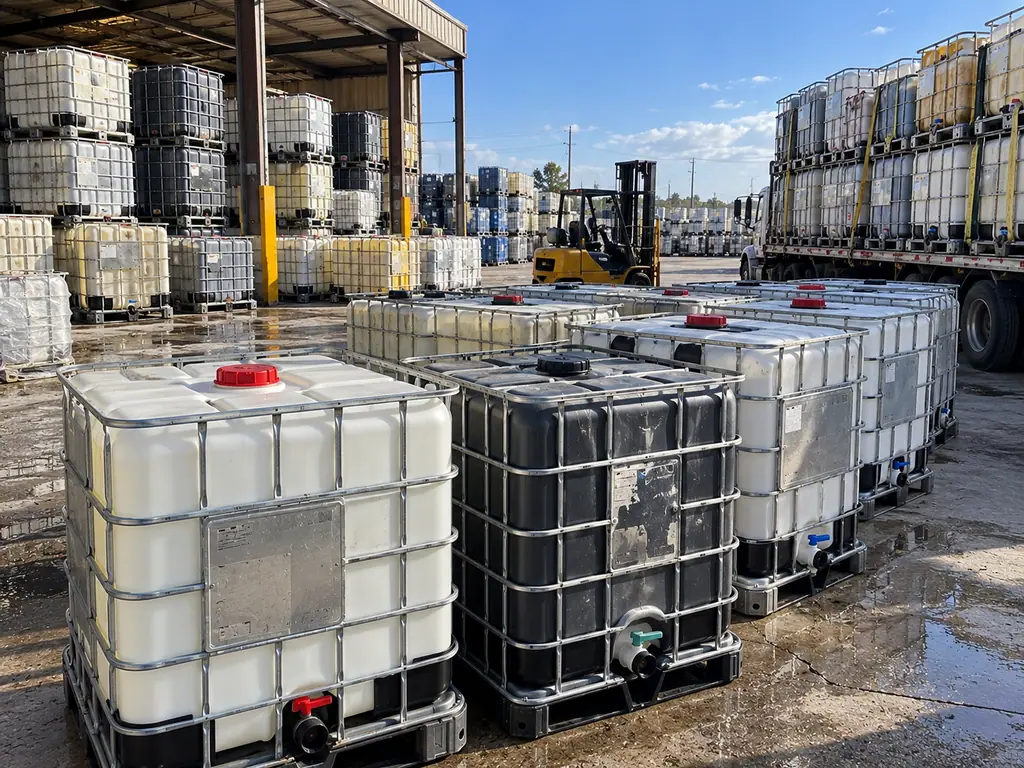
Bottle inspection gets all the attention because bottles hold the product. But the cage is the asset with the longer life and the higher replacement cost, and it is far more informative. Here is the walk-around.
Step 1 · Stand back and look at the silhouette
Before touching anything, look at the unit from ten feet, square on. A sound cage is a rectangle. Any lean, bow or twist is visible at that distance and invisible up close, because up close you see tubes rather than geometry.
Step 2 · Push a top corner
Lateral push, moderate force. Sound frames deflect slightly and return. A frame that moves and stays moved has a failed weld or a bowed vertical. This single test sorts most of a load.
Step 3 · The feet, on hands and knees
Feet live in whatever is on the floor, so they rust first and they take the forklift damage. Look for: through-rust where the tube meets the plate, sheared welds, plates bent inward, and the tell-tale shiny scuff of repeated fork contact.
A foot you can deform with a thumb is a repair. A tube you can push a screwdriver through is a scrap verdict, and it is the most common one we issue.
Step 4 · Weld survey, corner by corner
Four corners, top and bottom, plus the mid-rail joints. Count failures per corner, not per cage. Scattered failures are routine; three or more clustered in one corner means the geometry has already moved and re-welding gives you a cage that looks fixed and is not.
Step 5 · Galvanising
Surface rust is cosmetic and we wire-wheel and zinc-treat it. White powdery bloom is the zinc doing its job and is fine. Red rust in sheets, especially on the underside of lower tubes, means the coating is gone and the steel is on borrowed time.
Step 6 · Evidence of previous owners
Drilled holes, cut tubes, bolted brackets, straps welded on by somebody's cousin. Any of these is a scrap verdict on our line. We cannot certify a load path somebody else modified, and if the unit carried a UN marking, that marking is already void.
| Finding | Verdict | Time to fix |
|---|---|---|
| Lean visible at ten feet | Press and re-square | 40–90 min |
| Frame moves and stays moved | Weld survey, then press | 1–2 hr |
| Foot plate sheared | Jig and weld | 1 hr |
| Tube through-rusted | Scrap | — |
| 3+ welds failed in one corner | Scrap | — |
| Modified by previous owner | Scrap | — |
| Surface rust | Wire-wheel and treat | 15 min |
Why this is worth your time as a buyer
Because cage condition is what determines whether a unit has one more life or six. A pristine bottle in a tired cage is a short-term purchase. A sound cage with a tired bottle is a rebottling job and fifteen more years. The steel is the thing to look at.