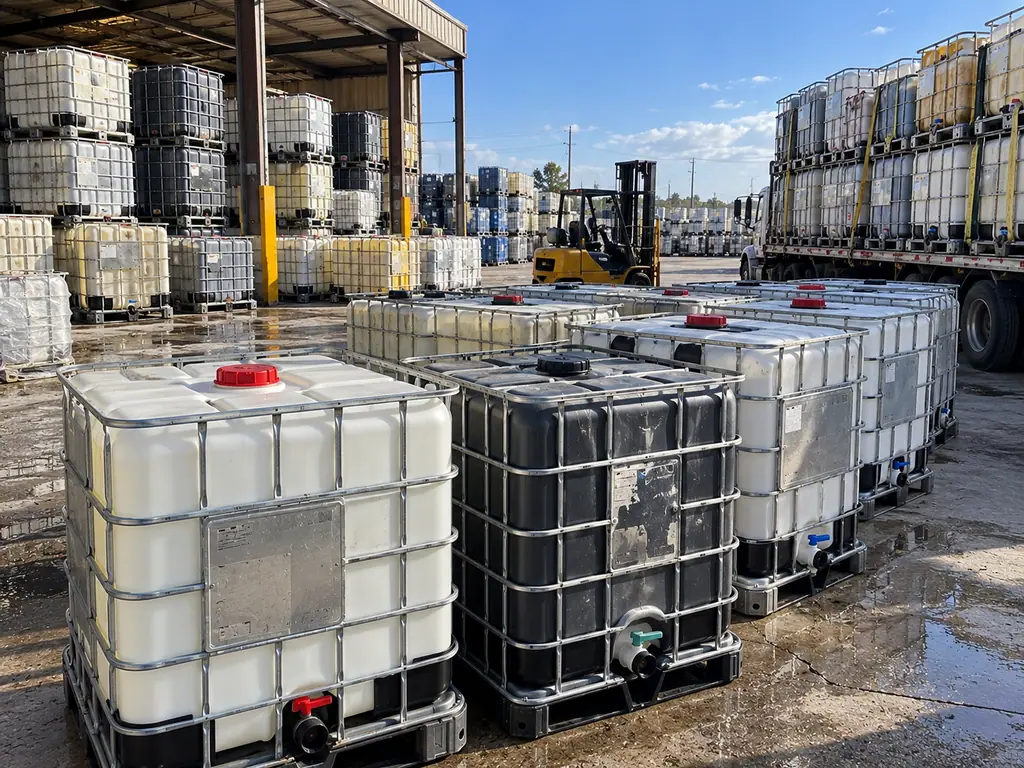
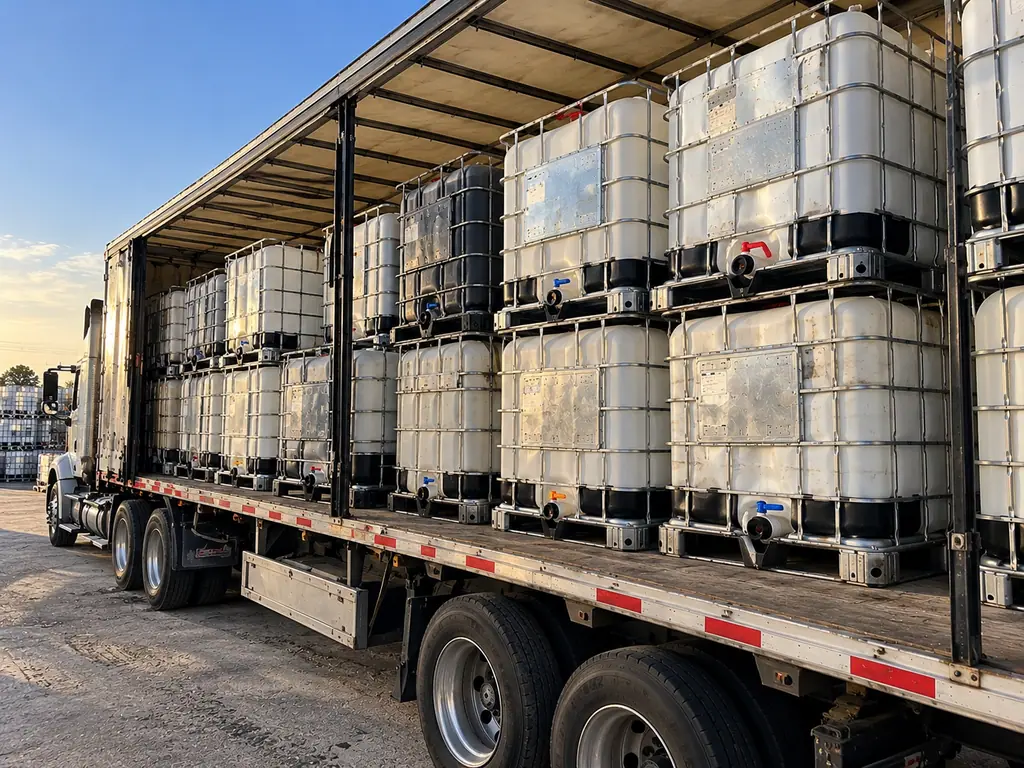
People occasionally write to ask how to start a tote reconditioning operation. We answer properly, because a region full of yards that grade honestly is better for us than a region full of yards that do not.
1 · Buy the wash line before the trucks
We did it the other way round and lost two years. Without a wash line you are a broker, and brokers compete on price alone. The line is what lets you buy ungraded material cheaply and sell graded material fairly.
2 · Weigh everything at intake
A floor scale costs very little and finds residue, age outliers and mis-declared loads before anybody opens a cap. It is the highest-return piece of equipment in the building after the line itself.
3 · Separate the bottle from the cage, mentally, on day one
Most of the industry treats a tote as one object and scraps perfectly good steel because of a tired bottle. Set up rebottling early. It cut our scrap rate by a third the year we started.
4 · Write the grade definitions down and never round up
Rounding up earns a few dollars a unit and costs a customer. Our rule is that a borderline unit is always listed at the lower grade, and it is the single policy most responsible for the fact that we are still here.
5 · Refuse the unknowns
There will be pressure to wash and sell bottles whose contents nobody can establish. Do not. One bad outcome in a food or potable application ends a business, and the saving is trivially small.
6 · Number the cages
A stencil and a database row. It makes graders honest, settles disputes in minutes, and eventually gives you data about your own fleet that nobody else in the industry has.
7 · Learn freight properly
Empty totes are among the least dense freight there is. If you do not understand density-based pricing and backhauling, freight will quietly consume your margin while you congratulate yourself on buying well.
8 · Find a regrind outlet before you need one
Six percent of intake cannot be saved. Without a granulation partner, that six percent becomes a pile behind your building that grows for two years and then becomes a disposal invoice.
9 · Do not compete on price with people who do not wash
You will lose, and the customers you win that way will leave anyway. Compete on documentation. It is the thing the cheap operators structurally cannot copy, because it requires doing the work.
10 · Answer your email
Unglamorous and decisive. A large share of our business came from being the only yard that replied within a day with an actual number. The bar in this industry is lower than it should be, and clearing it is mostly a matter of deciding to.
We would genuinely rather lose an order to a yard that grades honestly than win it from one that does not. The second kind makes every customer in the region more suspicious of reused equipment, and that costs all of us.