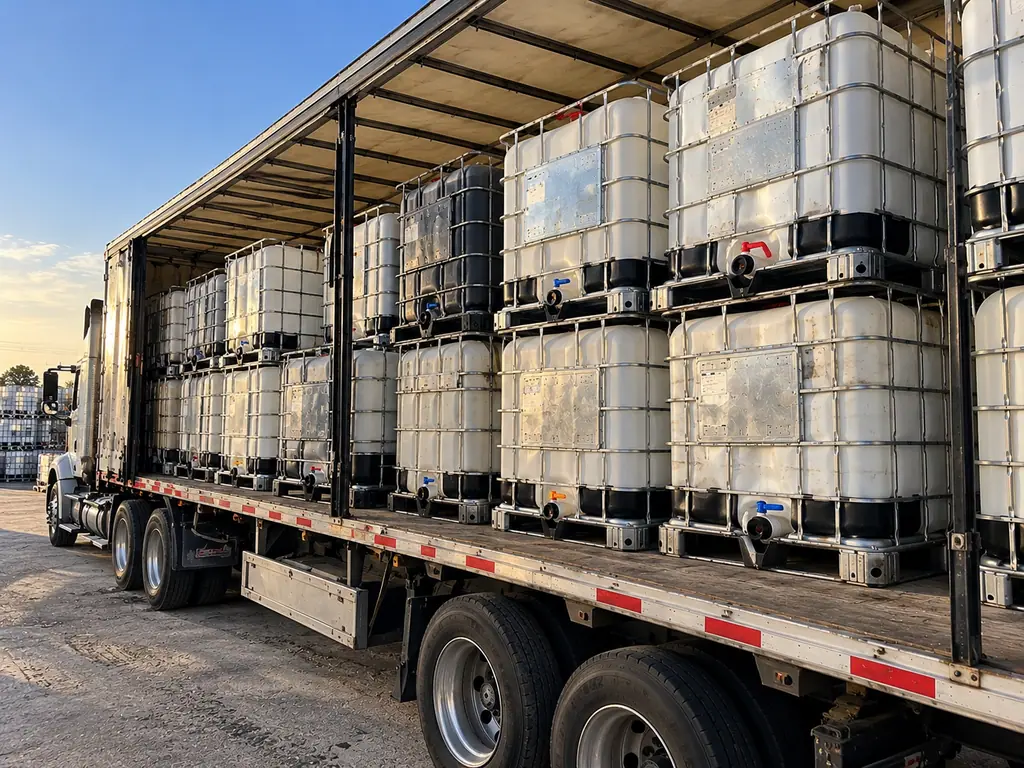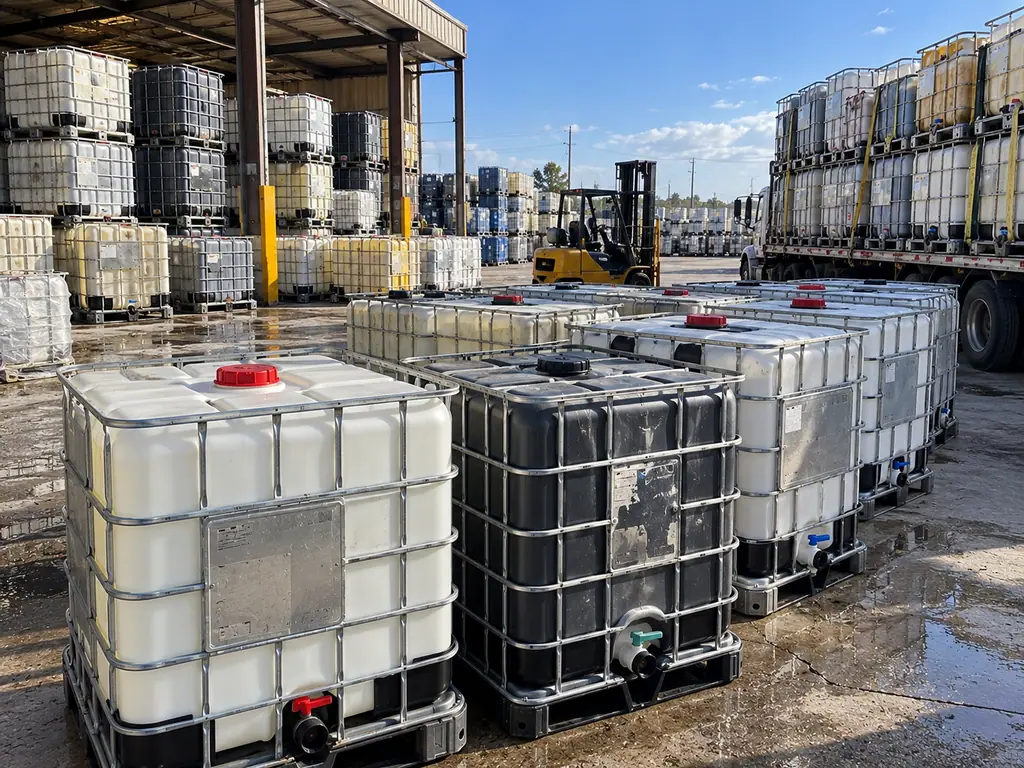
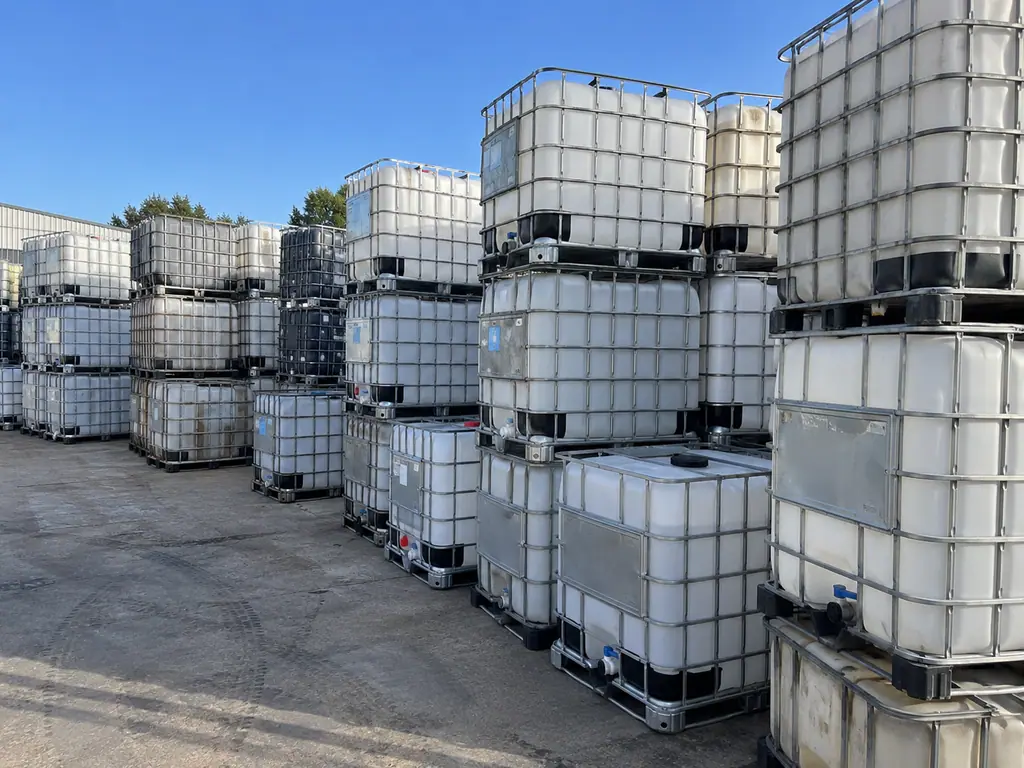
If you asked our intake crew what kills totes, they would not say chemistry, sunlight or age. They would say forklifts, and they would say it without hesitating.
What fork damage looks like
- A single bowed lower tube on one long side, usually the same side on every unit in a fleet.
- Foot plates pushed inward or sheared off at the weld.
- Deck-level scars on the bottle where a fork tip went past the pallet and into the plastic.
- Corner uprights bent outward at about knee height — that is a mast coming in at an angle.
- Crushed pallet decking on composite bases, which looks like wear and is impact.
The giveaway that it is handling rather than age is repetition. Age damages units randomly. A forklift damages them identically, because the same operator approaches from the same side with the same habit.
What it costs
A bowed tube is a forty-minute repair on our press. If the fleet is yours and you have no press, it is a unit that quietly drops a grade, cannot be stacked, and eventually gets scrapped early.
| Damage | Repair effort | If left alone |
|---|---|---|
| Single bowed lower tube | Press, 40 min | Cannot be stacked; grade drops |
| Sheared foot plate | Jig and weld, 1 hr | Unit rocks; accelerates frame fatigue |
| Bent corner upright | Press and re-square, 1–2 hr | Frame out of square; stack unsafe |
| Fork tip scar in bottle | Not repairable | Weeps within a season |
| Crushed composite deck | Base swap | Pallet-jack access lost |
Four habits that prevent nearly all of it
- Approach square. Almost all mast damage comes from approaching at five or ten degrees and correcting with the frame.
- Set fork spread to the pallet, not to the last load. Narrow forks concentrate load on the deck; wide forks find the bottle.
- Lower before travelling. A tote carried high has a load centre that will surprise an operator used to boxes.
- Set down on flat ground. Half the foot damage we see happened at set-down on a surface with a lip or a drain cover.
Why we tell customers this
Partly because it is useful. Mostly because handling damage is the one tote cost that is entirely within your control, and the fleets that treat it as a training issue get five or six extra years out of the same steel.
And when those fleets come back to us at end of life, their cages are worth considerably more. Which is the whole argument for looking after them, stated in money.