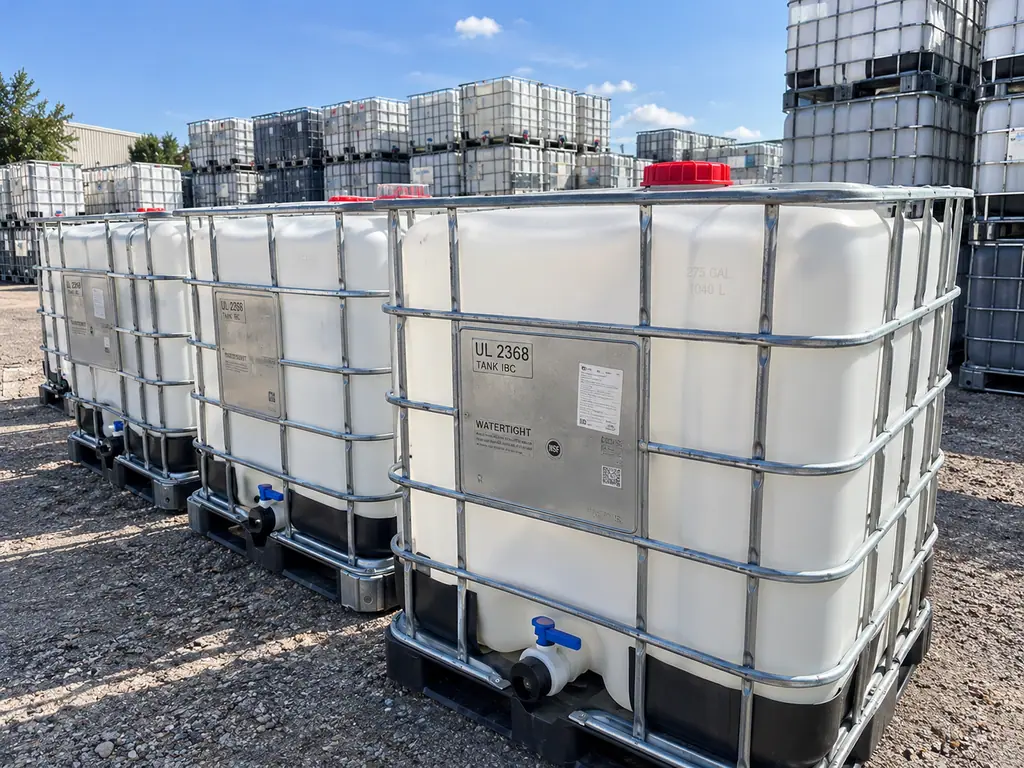
Ecology & impact
The greenest tote
is the one that
already exists.
No leaf icons, no offsets, no vague pledges for 2050. This page carries our actual commitments, the numbers behind them, and the one waste stream we still have not solved.
Totes diverted
412k
kept out of landfill since 2009
HDPE recovered
1.9k t
granulated, not buried
Steel kept in use
3.4k t
cages repaired, not scrapped
CO₂e avoided
46k t
modelled, factors published
Six commitments
Each one is measurable, or it is not on this page
If a commitment cannot be stated as a number we can be held to, it is an aspiration and belongs somewhere else.
Reuse before recycling, every time
A cage only enters the recycling stream after a technician has signed that it cannot be washed, repaired or rebottled. Recycling is an outcome we report, not an achievement we advertise.
Closed-loop wash water
Wash water is filtered, settled and recirculated through the line before treatment and discharge. Fresh draw per tote fell roughly 60% after the 2024 retrofit.
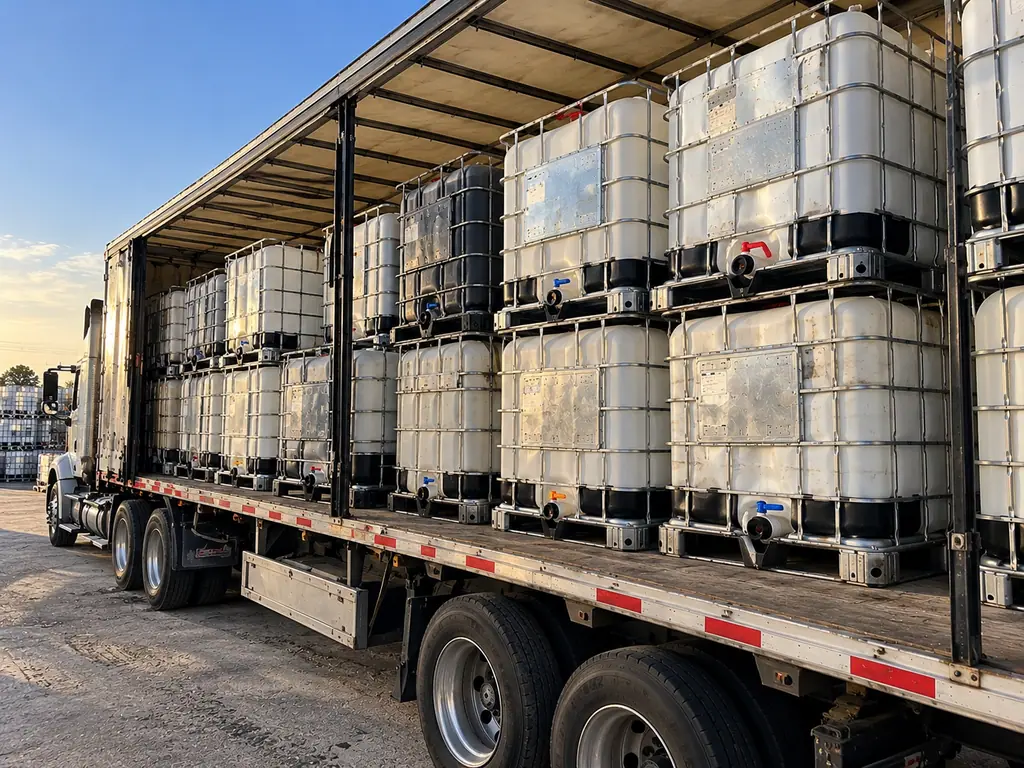
Backhauled freight
Empties ride home on trucks already running the lane. An empty flatbed is the most wasteful object in this industry and we plan routes to avoid owning one.
Zero landfill by 2028
Bottles to regrind, cages and pallets to steel, gaskets and labels to the only stream we have not yet solved. That last 1.4% is the whole remaining problem and we publish it.
No greenwashed language
We do not use the words biodegradable, carbon neutral or eco-friendly about any product on this site. Every environmental claim here has arithmetic behind it or it is not made.
Local loops first
Most totes are collected and resold within 300 miles. Shipping a used tote across a continent to save embodied carbon is self-defeating, and we will tell you when a lane stops making sense.
Run the numbers yourself
Your order,
in kilograms
Slide the quantity, pick the path, and the model updates. The factors are stated under the calculator so you can argue with them.
- 20.5 kg HDPE per 275-gallon bottle
- 48 kg steel per cage and pallet
- 1.9 kg CO₂e per kg virgin HDPE (cradle-to-gate)
- 1.85 kg CO₂e per kg virgin structural steel
- Freight excluded — it depends on your lane and we quote it separately
CO₂e avoided
3,066 kg
Virgin HDPE not made
492 kg
Steel kept in service
1,152 kg
Landfill volume spared
1,104 ft³
- Roughly the annual uptake of 146 mature trees.
- About 0.7 average US cars taken off the road for a year.
- Our wash line uses about 1,008 L for that many totes — already netted out above.
Estimates, openly stated: 20.5 kg HDPE per 275-gal bottle, 48 kg steel per cage and pallet, 1.9 kg CO₂e per kg virgin HDPE and 1.85 per kg virgin steel (cradle-to-gate literature values). Freight is excluded because it depends on your lane — we quote it separately. Full working is on the carbon math page.
Where the material actually goes
Mass balance of a scrapped tote
When a unit genuinely cannot be saved, this is the destination of every component, by weight.
| Component | Typical mass | Destination | Recovered? |
|---|---|---|---|
| HDPE bottle | 20.5 kg | Cut, washed, granulated into regrind for pipe, pallets and drainage | Yes — 100% |
| Galvanised cage | 36 kg | Steel mill, re-melted into new structural stock | Yes — 100% |
| Steel or composite pallet | 12 kg | Steel mill, or re-used as a spare base | Yes — 100% |
| Valve & outlet assembly | 0.9 kg | Harvested for spares where threads are sound, otherwise mixed plastics | Mostly |
| Gaskets, seals, labels | 0.2 kg | The one stream we have not solved — currently waste to energy | No |
Reuse is available today.
Every tote you buy reconditioned instead of new is roughly 112 kg of CO₂e that never enters the atmosphere. Start with one form.