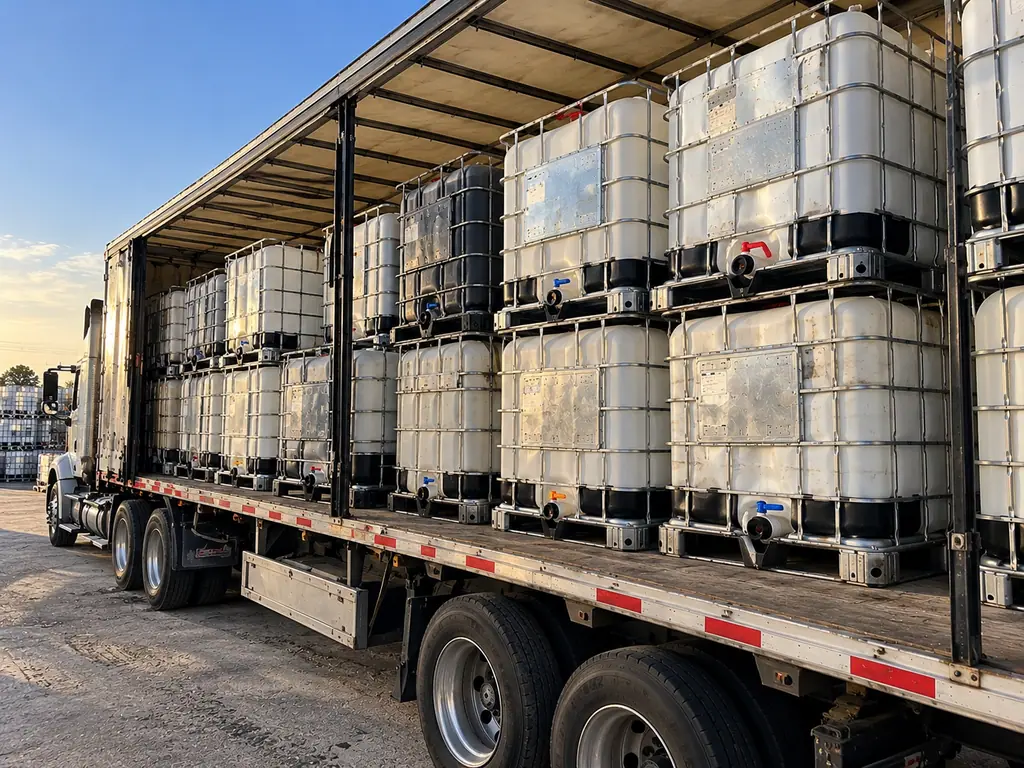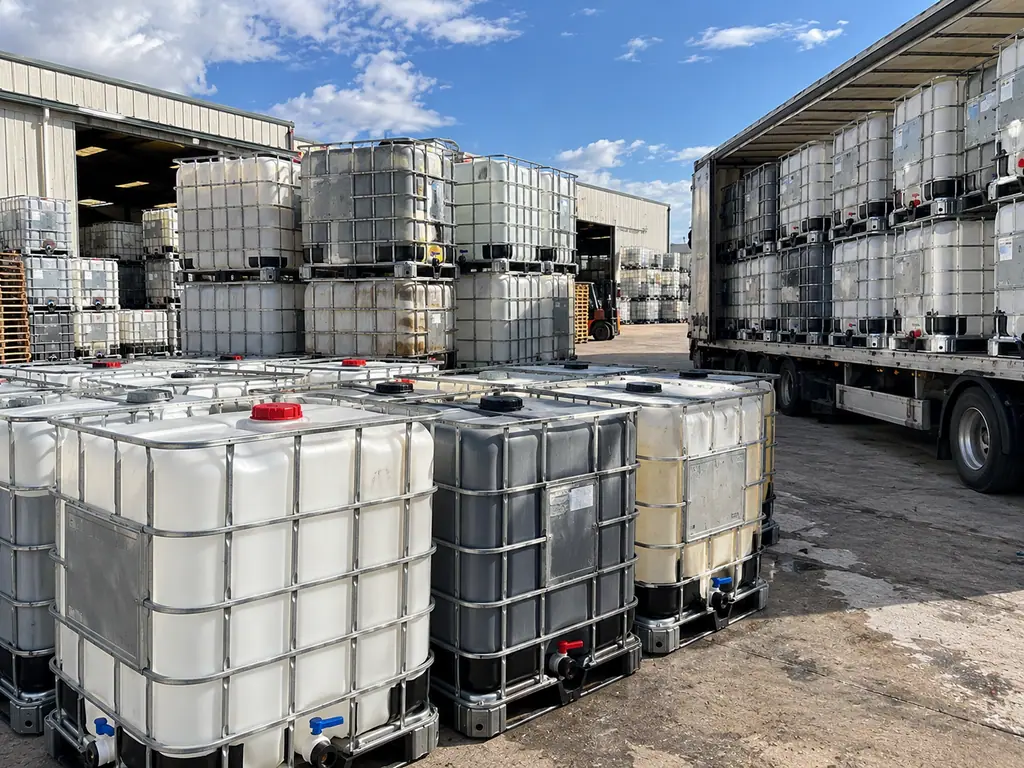
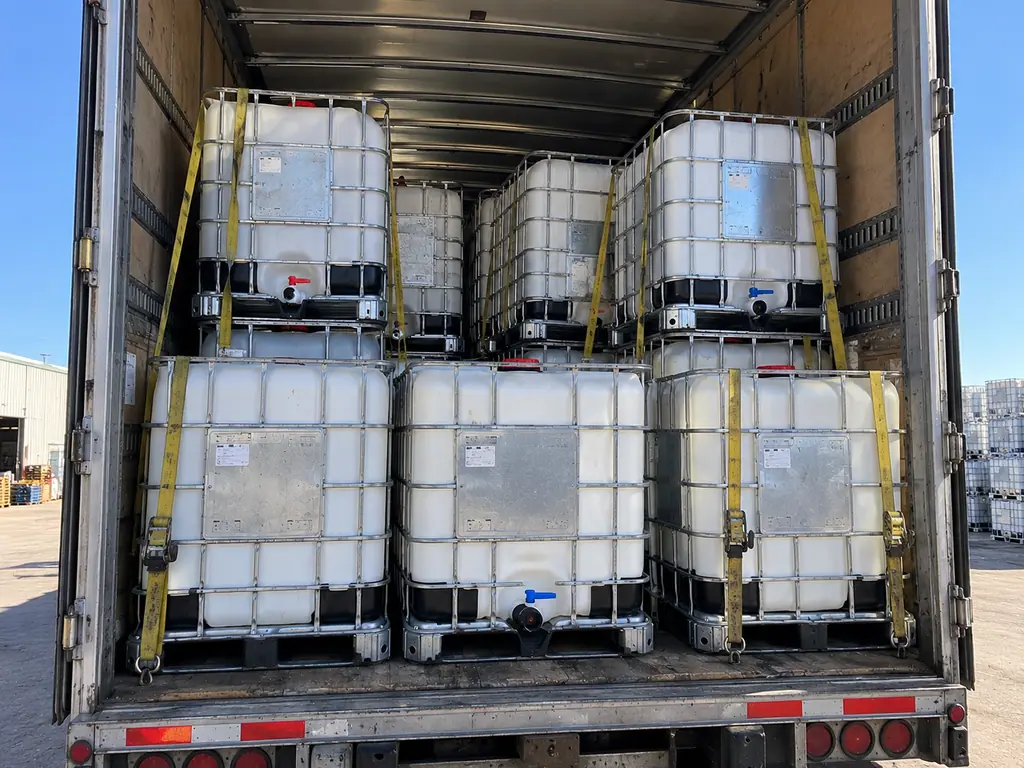
Roughly one unit in fourteen arrives with no usable record of what it last held. That unit is the hardest decision in the yard, and we make the same decision every time.
The process
- Quarantine. The unit goes to a marked area, not into the wash queue.
- Documentary search. Original label remnants, cage plate, the seller's business type, anything written on the unit in marker. You would be surprised how often this resolves it.
- Sensory assessment from outside the bottle. Residue colour, viscosity, crystal structure, odour at the port — by a trained person, at arm's length, never by putting a face over an open port.
- A decision: identified with reasonable confidence, or not.
If identified
It enters the normal wash categories, with the identification noted in the file as inferred rather than documented. That distinction stays with the cage permanently, and the unit will never be sold as food grade regardless of what the inference was.
If not identified
The bottle goes to regrind. Not to a cheaper grade, not to a non-contact use, not washed and sold as-is with a disclaimer. To regrind.
The cage, the pallet and usually the valve are recovered and go back into service, because none of those absorbed anything. So the unit is not a write-off — about seventy percent of its mass and most of its value is recovered.
Why not just wash it and sell it cheap
- Washing without knowing the residue means choosing a chemistry at random. Some combinations are genuinely hazardous to the people running the line.
- Absorbed residue in the HDPE wall does not come out, and we would have no way of knowing whether there is any.
- A disclaimer does not travel. The second owner of that tote will never see it.
- It is the one thing that would make every other grade on our site meaningless.
The things we never accept at all
- Units still containing liquid.
- Hazardous residue without a manifest.
- Radiological, medical or explosive-contact containers, under any circumstances.
- Units whose labels have been removed to conceal what they held.
That last one is the only item on this list that ends a commercial relationship immediately. Everything else is a conversation; that one is a decision somebody made about our crew's safety.