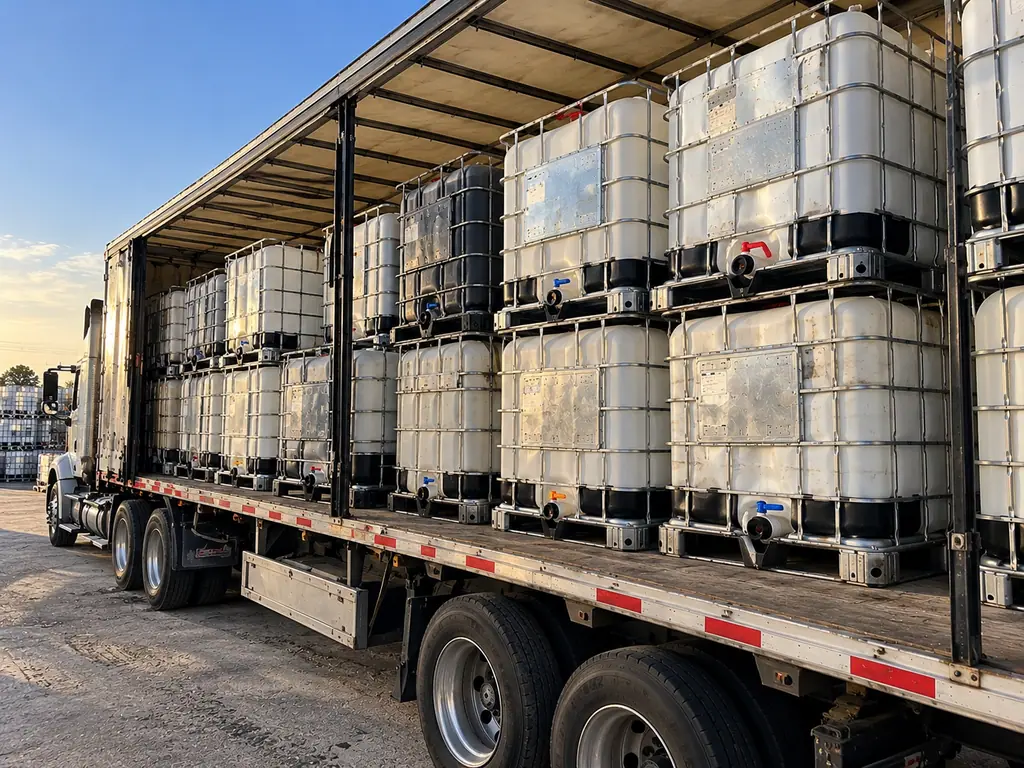
A township public works crew came to us with a problem: a low-lying road that floods two or three times a year, and a budget that did not stretch to engineered barrier systems. What follows is what we built together.
The concept
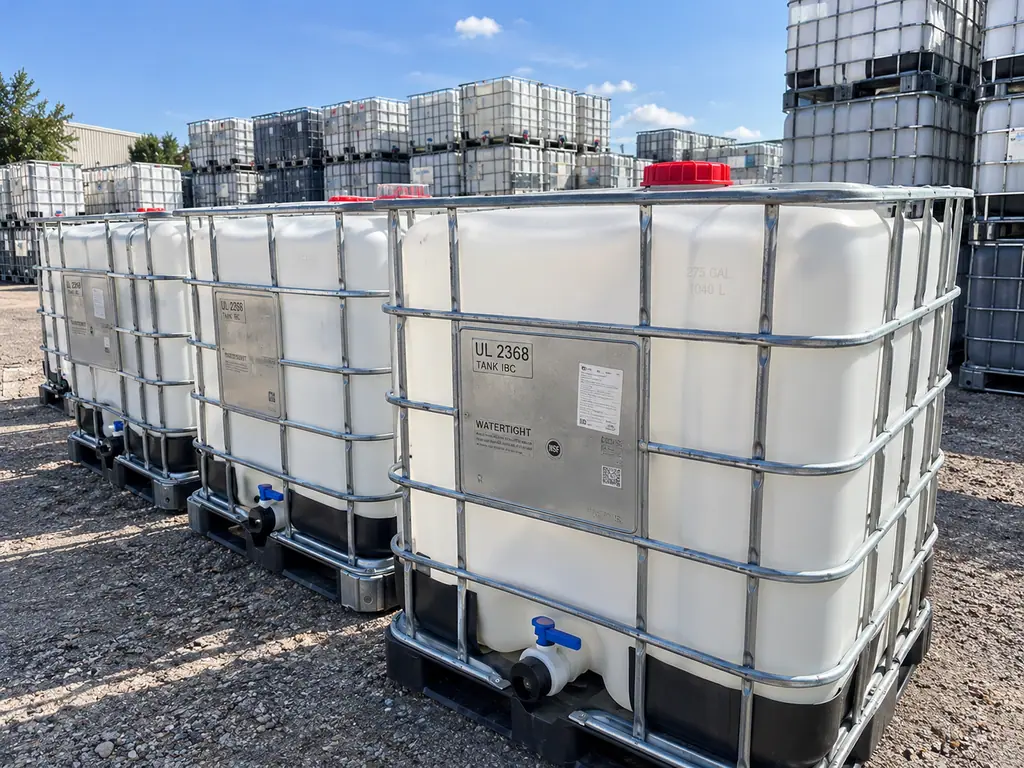
A tote filled with water weighs about 2,300 lb and occupies a 48 by 40 inch footprint. Linked in a line, filled on site from a hydrant, totes make a barrier that is heavy enough to stay put, fast to deploy, and trivially cheap compared with the alternatives.
It is not an engineered flood defence and we were clear about that. It is a temporary diversion barrier for predictable nuisance flooding.
The build
- Donor selection. Forty technical-grade units with sound cages and bottles that would not pass a contact-use grade. Exactly the stock that is otherwise hard to place.
- Inspection and wash. A single rinse, because the contents will be hydrant water, plus a check that every valve seals.
- Drilling jig. Each cage drilled at four points on the end frames, in identical positions, so that any unit links to any other.
- Link plates. Flat steel plates with matching holes, bolted through, giving a rigid connection rather than a flexible strap.
- Fill and drain fittings. A 2 inch camlock on each outlet so the crew can gang-drain the line in one pass rather than opening forty valves.
- Numbering. Each unit stencilled, because a barrier with three missing sections is a barrier with a hole.
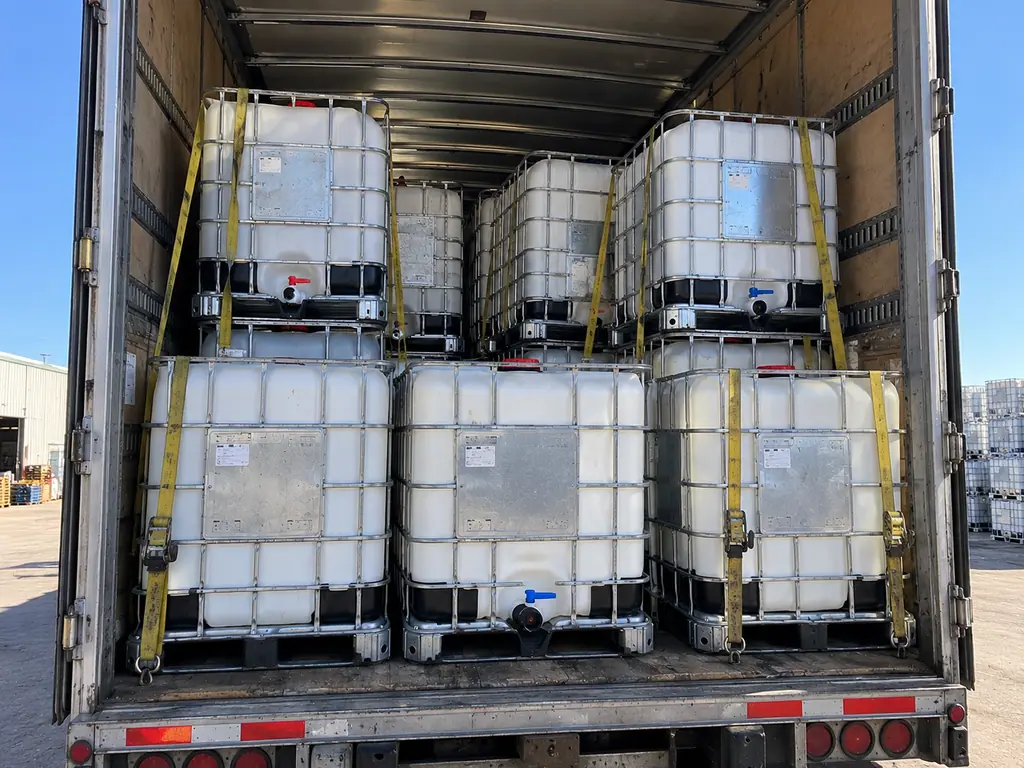
- Storage pallets. Units nested four to a stack with the link plates bagged and tied to the cage.
What we learned during deployment testing
- Fill after placement, never before. A filled tote cannot be adjusted and the crew will want to adjust.
- Fill to about 85 percent. A completely full bottle is rigid and transmits impact to the link plates; a slightly under-filled one absorbs it.
- Ground matters more than the barrier. On soft shoulders the units settle unevenly and the line opens at the joints. The crew now lays plywood on soft sections.
- Draining is the slow part. Hence the camlocks and a single drain hose along the line.
- Winter deployment means the barrier freezes solid. That is fine while it is deployed and a serious problem when you want to move it.
| Item | Count | Note |
|---|---|---|
| Technical-grade totes | 40 | Scrap-adjacent stock, sound cages |
| Link plates and hardware | 160 sets | Hot-dip galvanised |
| 2" camlock fittings | 40 | Gang draining |
| Deployed length | ~160 ft | End to end, single row |
| Deployment time, 4-person crew | ~90 min | Excluding fill |
| Fill time from hydrant | ~2 hr | Two units at a time |
The thing worth copying
The jig. Drilling forty cages in identical positions is what makes any unit link to any other, which is what makes a barrier modular rather than a set of forty individually fitted objects. An afternoon making the jig saved the crew a season of frustration.