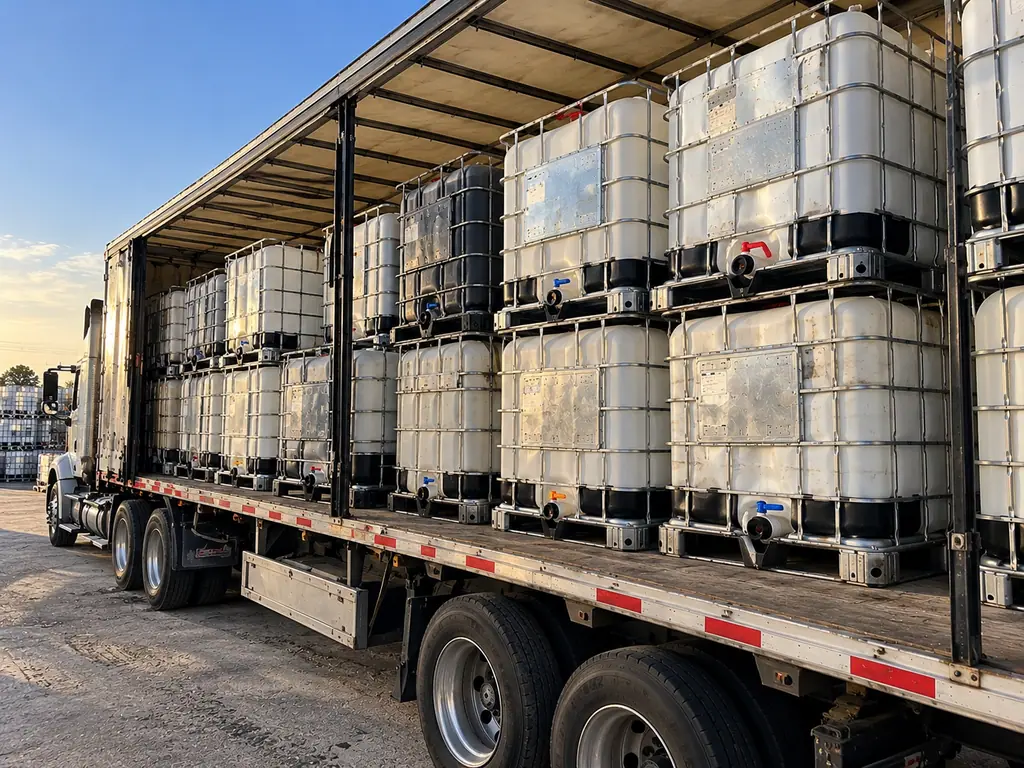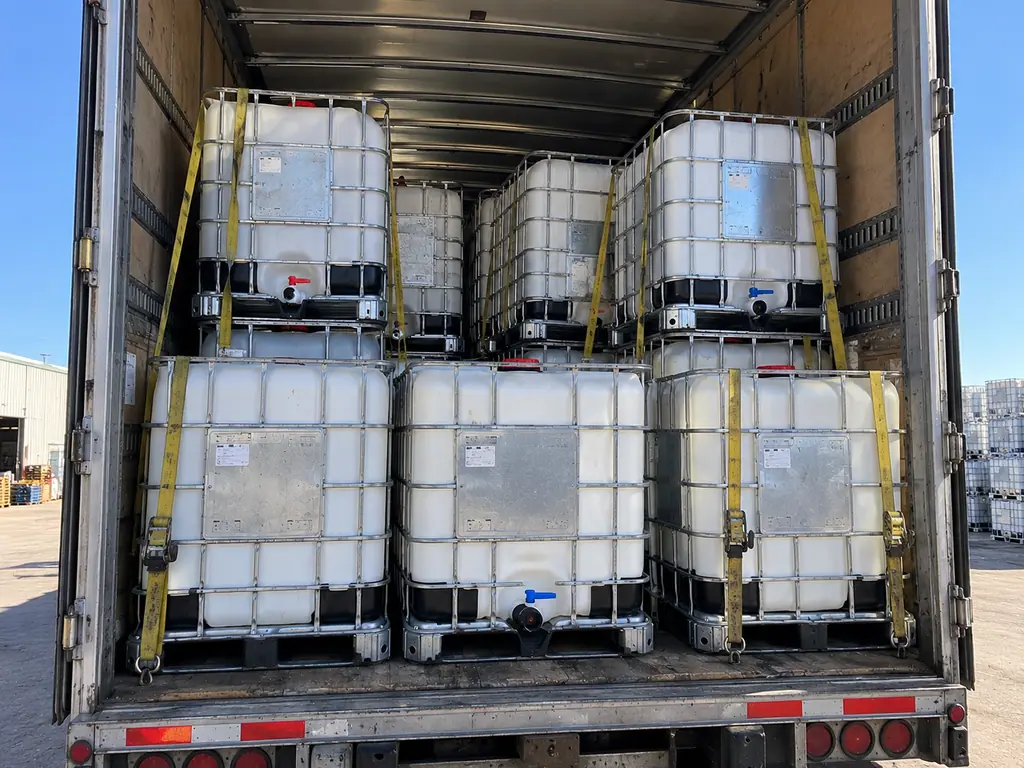
When a bottle is finished but the steel is perfect, we separate them. The bottle goes to regrind. The cage goes on a pallet near the gate with a price that makes people do a double take.
What you are actually buying
A galvanised tubular steel frame, 48 by 40 inches, roughly 46 inches tall, on an integral pallet base. It stacks three high, it takes forks from any side, it is weatherproof for decades, and it weighs about a hundred pounds.
New, as a piece of material handling equipment, it would be a serious purchase. Used, with its bottle gone, it is the cheapest item in the yard.
What customers do with them
- Firewood crates. The single most popular use. A cage holds roughly a third of a cord, stacks, and lets air through for seasoning.
- Produce and root storage on farms — onions, squash, potatoes, with a liner.
- Parts and offcut storage in workshops, because they stack and a fork can move them full.
- Scrap metal collection, where the weight does not matter and the strength does.
- Temporary fencing and barriers when linked with strapping.
- Raised bed frames, with a liner and a drainage layer.
- Equipment protection — a cage inverted over a wellhead or a pump is a cheap guard.
- Firewood again, honestly. It is most of the volume.
What they are not good for
Anything requiring a smooth interior, anything where the galvanising will be in food contact, and any load that needs containment. A cage is a frame, not a container, and the moment you line it with something you have created a vessel whose strength is the liner, not the steel.
The environmental argument, briefly
A cage is about 48 kg of steel and pallet. Sending it to a mill recovers the material but pays most of the manufacturing energy over again — roughly 60 kg of CO₂e to make the replacement. Selling it as a crate avoids all of that and displaces whatever new crate somebody would otherwise have bought.
The thing we like about this product
It is the clearest version of what this company is for. Somebody built a steel frame to carry a chemical for a year. Fifteen years later it is holding somebody's firewood in a yard in Howell, and nobody had to mine any ore to make that happen.