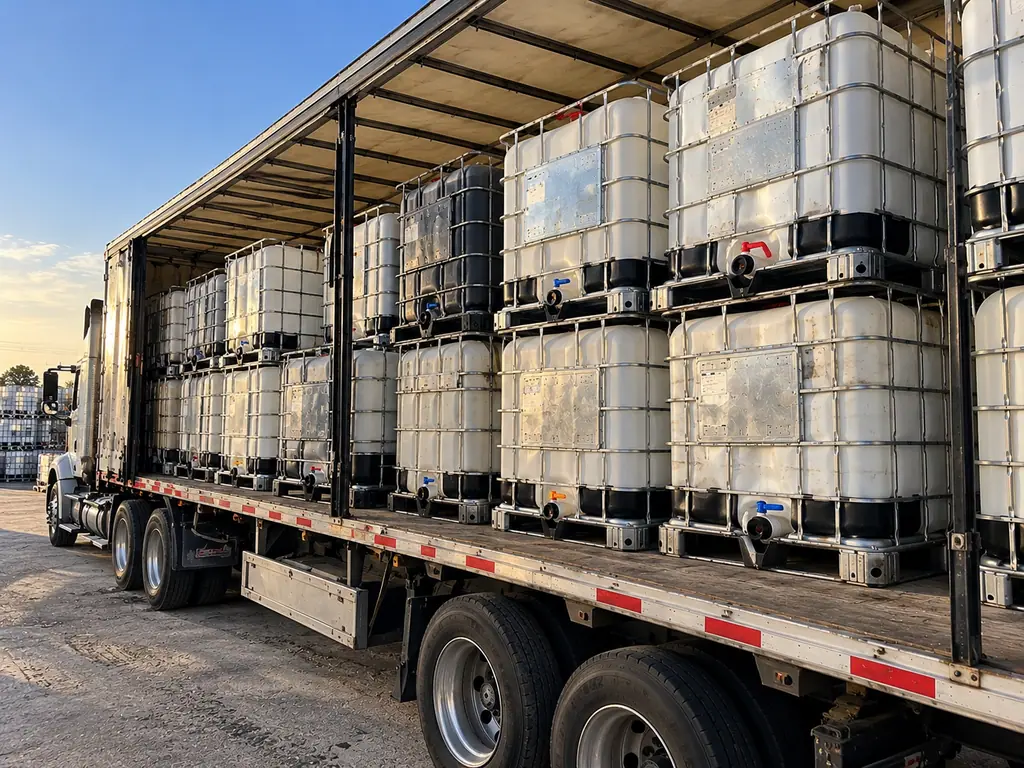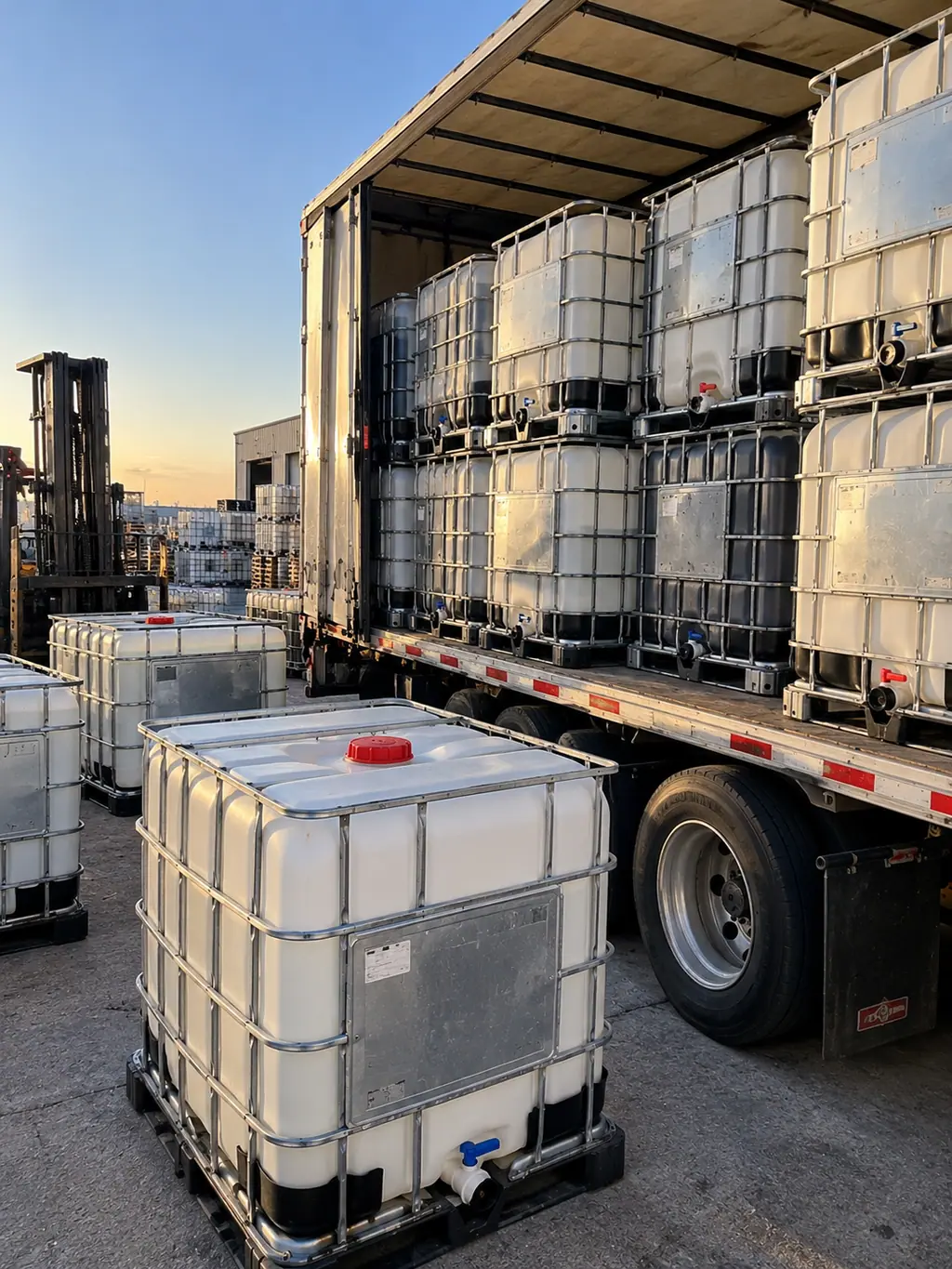
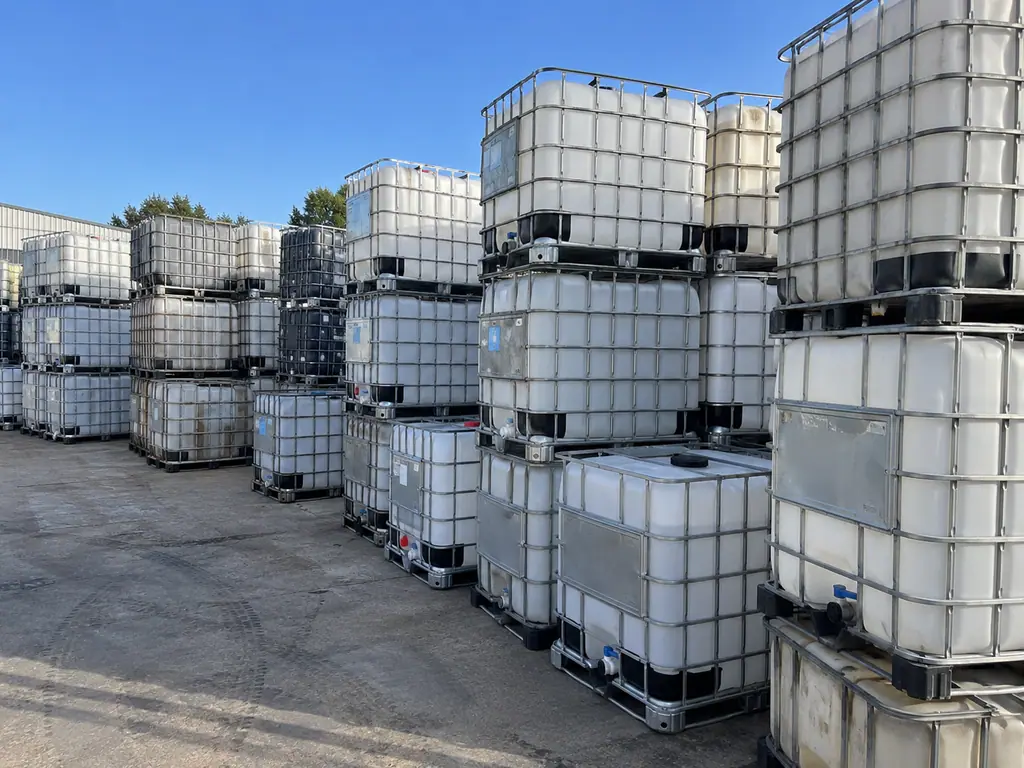
Customers routinely send us two LTL quotes for the same shipment that differ wildly and ask which one is wrong. Usually neither. They are classifying the same objects differently.
Why density is the problem
LTL freight pricing is driven largely by density — pounds per cubic foot. Carriers price low-density freight higher because it fills a trailer without loading it.
An empty IBC tote is one of the least dense things you can ship. A 275-gallon unit occupies roughly 46 cubic feet and weighs about 130 lb, which works out at under 3 lb per cubic foot. For comparison, a pallet of paper runs 30 or more.
That puts empty totes near the bottom of the density scale and therefore in an expensive freight class.
| Shipment | Approx. density | Relative LTL cost |
|---|---|---|
| Empty 275 gal tote | ~2.8 lb/ft³ | Highest class |
| Empty 330 gal tote | ~3.2 lb/ft³ | Highest class |
| Cage only, nested | ~3.5 lb/ft³ (nested 3 high) | High, but a third of the units |
| Full tote of water | ~52 lb/ft³ | Low class, high weight charge |
| Pallet of valves and fittings | ~18 lb/ft³ | Mid class |
Three ways the quotes diverge
- Different declared class. One broker classified by density, another used a commodity code. Same freight, different number.
- Accessorials. Lift gate, residential delivery, limited access, call-ahead — each is a line item and quotes vary in which ones they assume.
- Dimensional rounding. A tote on a steel pallet is 46 inches tall; rounded to 48 for cube calculation, that is 4 percent more volume on every unit.
What actually makes it cheaper
- Volume. Four totes is a bad LTL shipment. Twenty is a partial truckload, which is priced completely differently and usually works out cheaper per unit by a wide margin.
- Flexibility on date. Riding an existing lane as a backhaul removes most of the cost.
- Stacking empties. Double-stacked sound cages halve the deck space.
- Collecting yourself for small quantities. For one to four units inside a couple of hours' drive, your own trailer beats every freight quote.
- Cage-only orders, nested, which triples the units per deck foot.
Why we quote the way we do
Inside our 300-mile core radius we run our own trucks and quote a real number based on the route, not a classification table. Outside it we broker, name the carrier, and quote the transit we actually expect. We would rather lose an order than win it with a transit time we know is optimistic.