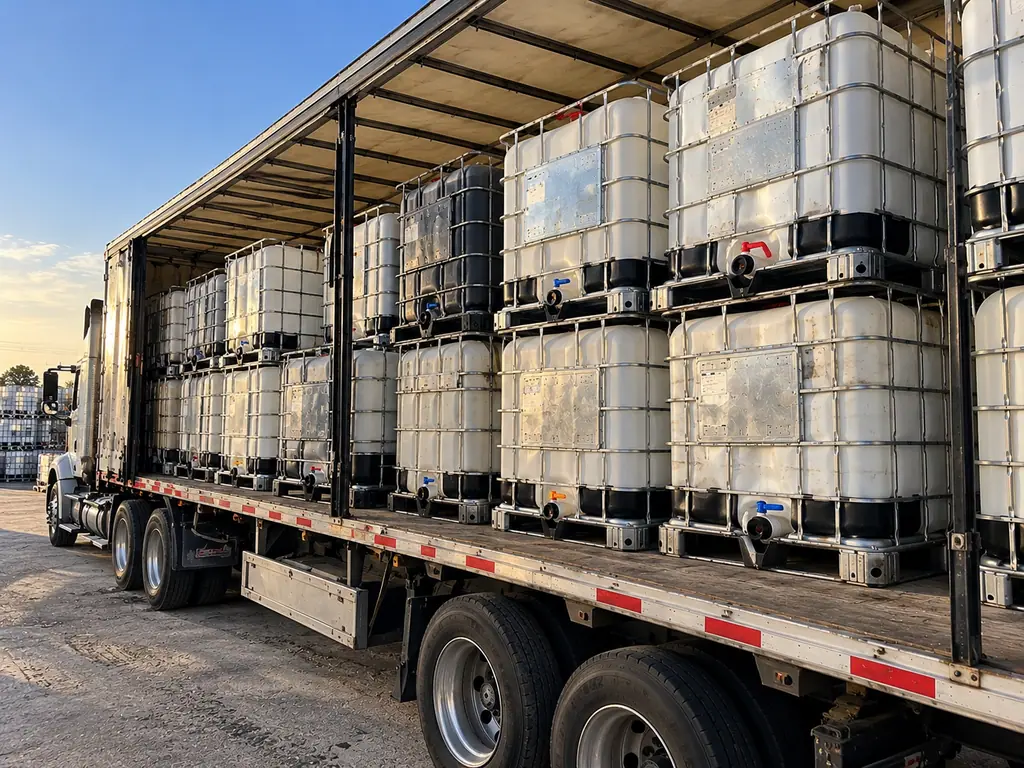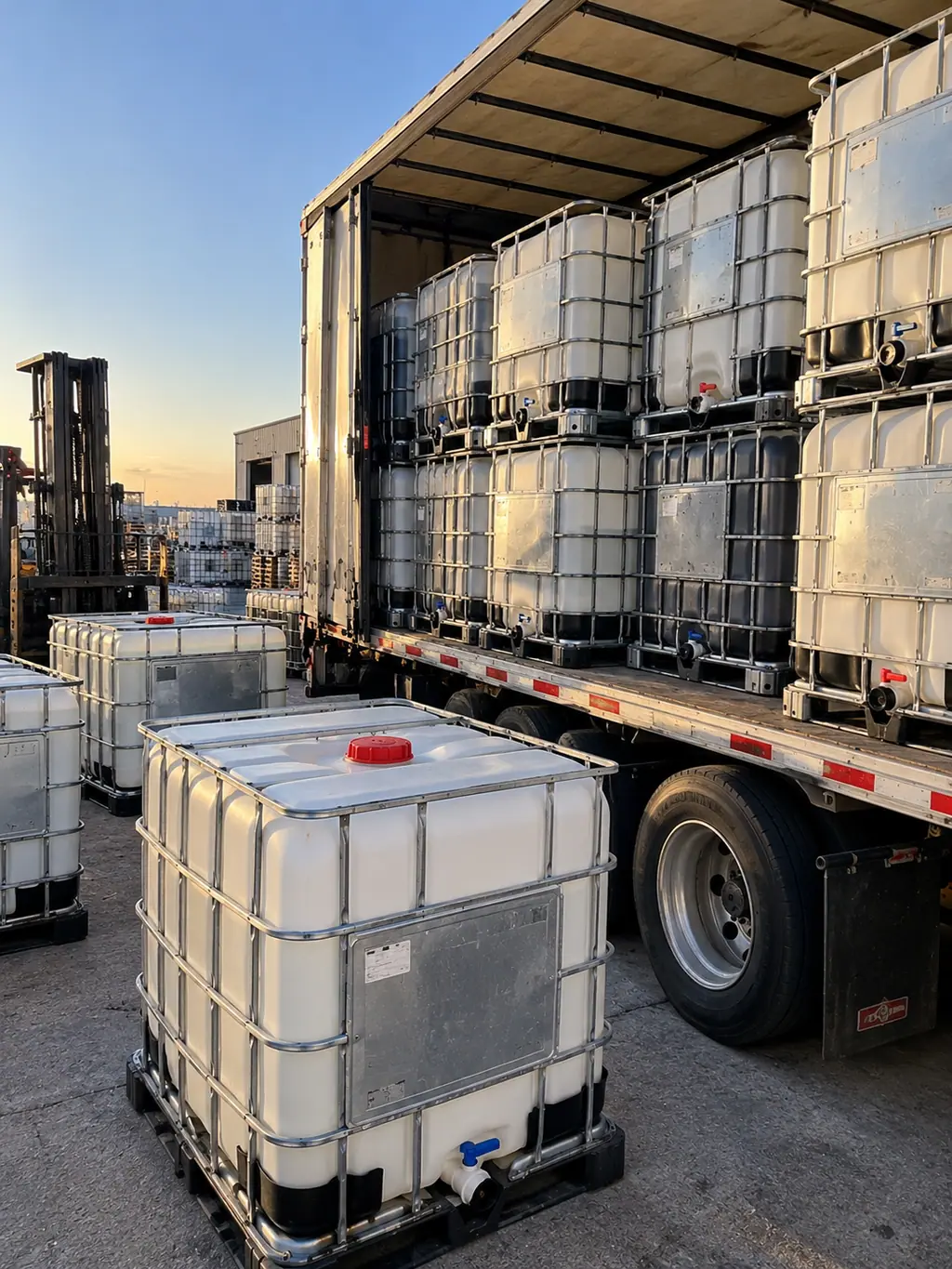
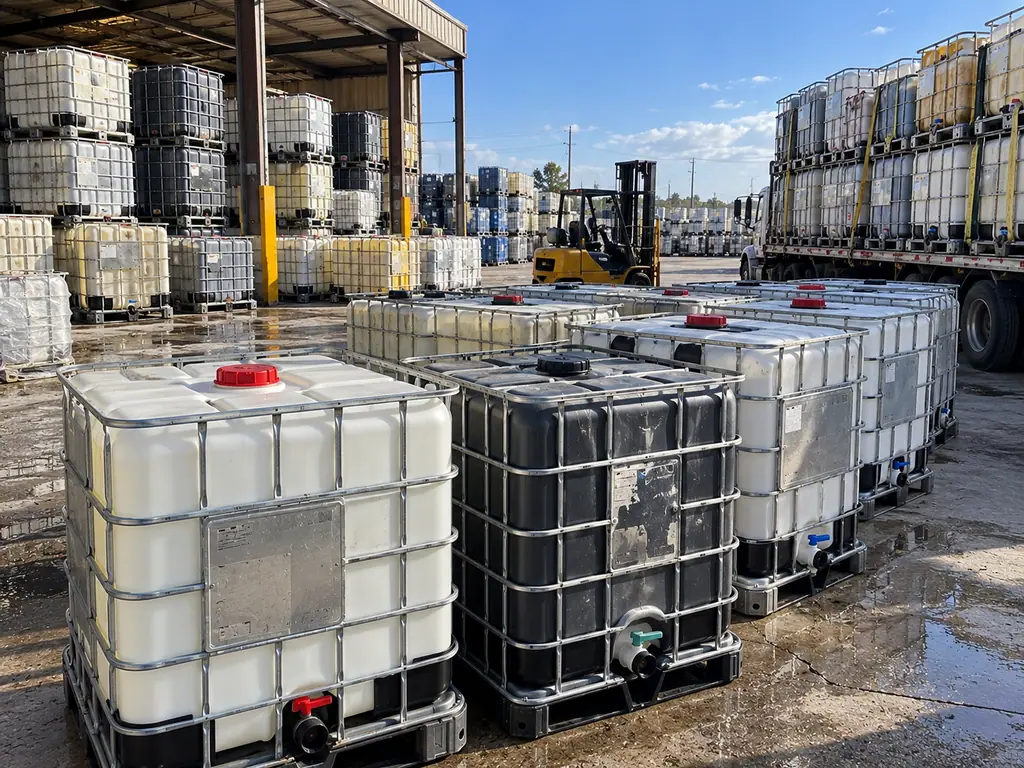
A 275-gallon tote and a 330-gallon tote have almost nothing in common dimensionally except the thing that matters most: both sit on a 48 by 40 inch footprint. So does a standard grocery pallet, a drum pallet, and most of the material handling equipment in the country.
What the standard buys you
- Two-wide loading in a 48 or 53 foot trailer with almost no wasted deck.
- Interchangeability with every pallet jack, forklift and rack in general use.
- Racking that was designed for groceries also holds totes.
- Spare bases: a steel pallet off a scrapped unit fits a sound bottle.
- A used market deep enough that prices are real rather than negotiated from scratch.
That last point is the big one and it is invisible. The reason a used 275 has a predictable price is that the footprint standard made the format fungible. Fungible goods have markets. Non-standard goods have individual negotiations.
Where it costs you: the height question
Because the footprint is fixed, every increase in capacity has to come from height. That is why the 330 is tall rather than wide, and why height is the dimension that breaks dock doors, mixer clearances and trailer plans.
If the standard had allowed a wider footprint, a 330 could have been the same height as a 275. It does not, so the capacity you buy comes with a clearance problem attached.
Where it costs you: the pallet type trap
Same footprint does not mean same base. Steel, composite, plastic and the occasional wooden base all occupy 48 by 40 inches and differ in three ways that matter:
| Base | Stack-up added | Weight added | Watch out for |
|---|---|---|---|
| Steel | 5–6" | 25–35 lb | Rust at the feet; heaviest to handle |
| Composite | 4–5" | 15–25 lb | Plastic deck cracks under point loads |
| Plastic | 4–5" | 10–18 lb | Slippery when wet; pallet-jack access varies |
| Wooden | 4–6" | 20–30 lb | Not for food, not for export, rots |
That two inches is exactly the margin by which a 330 fails to clear a dock door. We have had the conversation.
Freight arithmetic the standard enables
Because the footprint is fixed, truckload counts are arithmetic rather than guesswork: 44 units of 275 on a 48-foot flatbed, 40 if they are 330s, 48 and 44 respectively in a 53-foot van. That predictability is why we can quote freight before seeing your units.