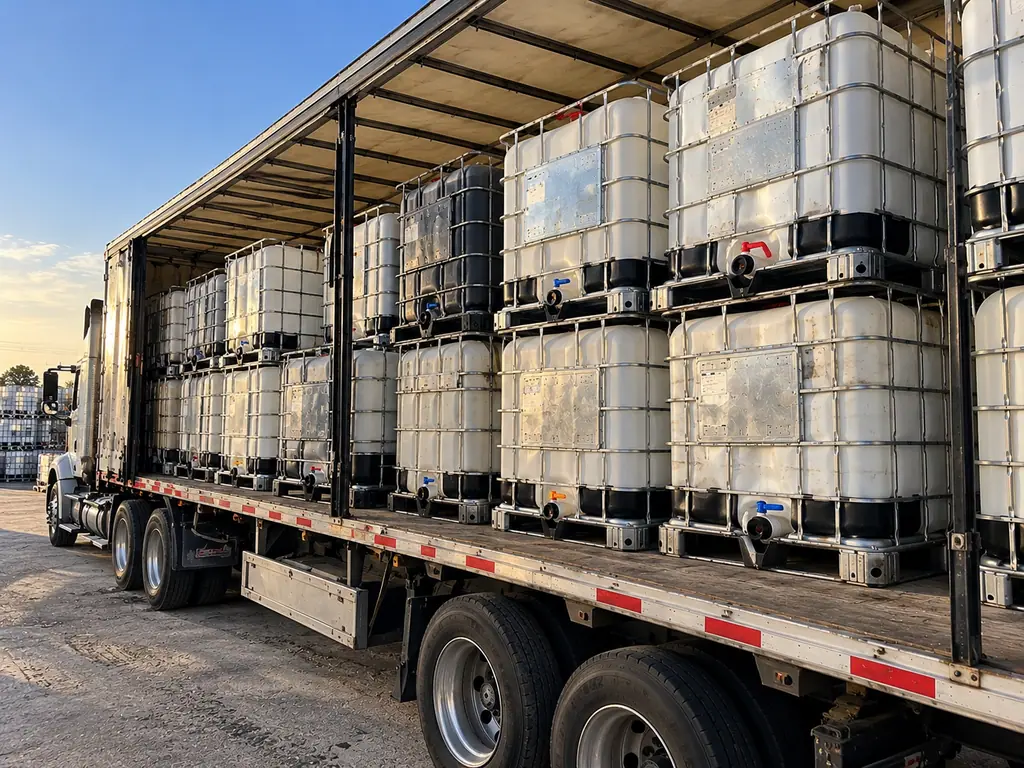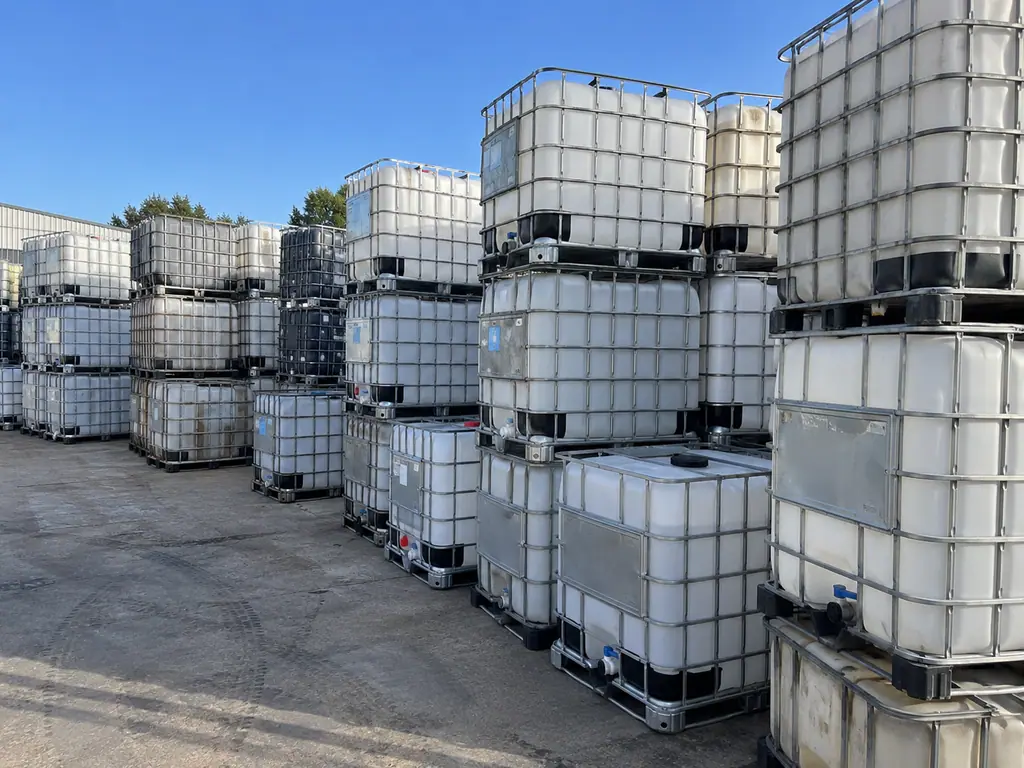
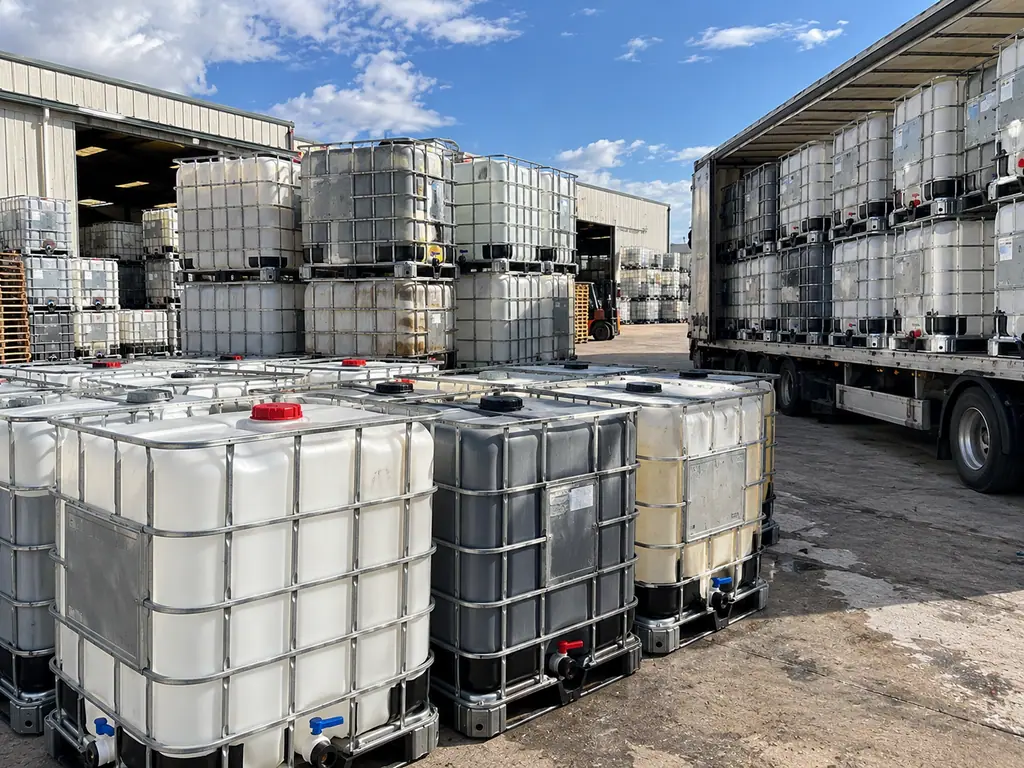
Pressure washing is the default mental image of cleaning a tote, and it is the stage we use least. Here is why, from people who own both a pressure system and a caustic line and choose between them every day.
What pressure is good at
Mechanical removal of loose material. Sediment, settled solids, dried crusts of something water-soluble, the general grime on an outside surface. For those jobs a rotating head at 2,000 psi is fast, cheap and correct, and it is exactly what we use on category E units that held water or brine.
What pressure cannot do
- Remove an oil film. Pressure moves oil around; it does not break the bond. You need a surfactant or caustic.
- Remove absorbed residue. Anything that has diffused into the wall of the HDPE is chemically part of the bottle now.
- Reach the corners of a blow-moulded bottle reliably. The spray pattern has geometry, and the corners are where residue pools.
- Deal with adhesive from labels, which needs heat and chemistry.
- Produce a record. Pressure is a number; cleaning is a process.
What high pressure can damage
A direct 3,000 psi jet held close to an HDPE wall will haze it, and on an older bottle that has already been through UV exposure it can raise the surface. A hazed interior is harder to inspect and harder to clean next time.
It will also strip the printing off a marking panel, which matters a great deal if the unit is UN rated — an illegible panel means the unit cannot be presented as rated, and no amount of knowing what it says fixes that.
What we do instead, by residue type
| Residue | Method | Why not pressure |
|---|---|---|
| Settled solids, grit | High-pressure rotating head | Pressure is correct here |
| Water-soluble salts | Triple rinse, warm | Dissolution, not force |
| Oils and surfactants | Hot caustic, 140–160°F | Needs chemical action |
| Sugars and food residues | Steam plus food-safe detergent | Heat and biology, not force |
| Label adhesive | Hot caustic with dwell time | Pressure polishes it in |
| Absorbed aromatics | None — bottle to regrind | Nothing removes it |
If you are washing your own
Three things that make a bigger difference than raising the pressure: warm the water, add dwell time with a surfactant before you rinse, and drain completely and dry. The third one is the one almost everybody skips, and standing water is how a clean bottle becomes a biology experiment.
And wherever the wash water ends up, make sure it is not a storm drain. That is a smaller conversation than a larger one with your municipality.